Category: Kashmiri Heritage

  • Kashmiri Handicrafts: A Timeless Tradition

    Kashmiri Handicrafts: A Timeless Tradition

    Kashmir, often is renowned not only for its stunning landscapes and tranquil lakes but also for its rich legacy of handicrafts. For centuries, Kashmiri artisans have crafted exquisite masterpieces, preserving skills handed down through generations. From luxurious Pashmina shawls to intricately carved wooden artifacts, Kashmiri handicrafts embody the spirit of the region’s culture and craftsmanship.
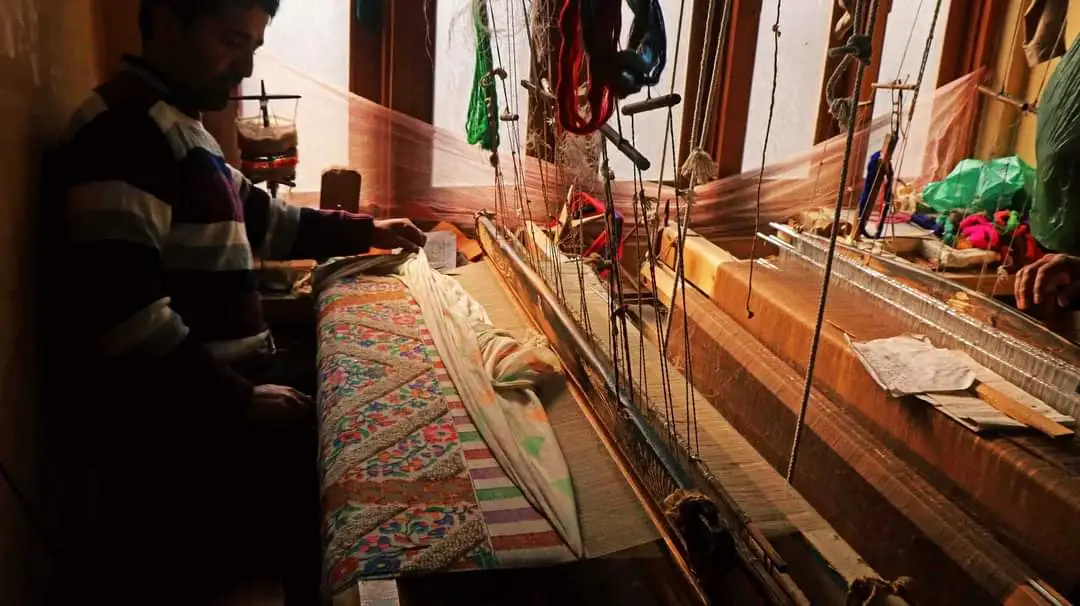
    The art of Kashmiri craftsmanship is more than just a livelihood; it’s a way of life. Each creation tells a story, reflecting the creativity and dedication of artisans who have perfected their skills over generations.

    Kashmiri handicrafts are a traditional art of Kashmiri people and artisans who make, craft, and decorate objects by hand. Ganderbal and Budgam are the main districts in central Kashmir, which have been making handicraft products for ages. The rest of its districts, including Srinagar, Ganderbal, and Budgam, are best known for their cultural heritage, which includes the handicraft industry in Jammu and Kashmir, India.

    Embroidery is an integral part of many Kashmiri handicrafts, shawls, carpets, and Kashmiri ladies’ pheran are adorned with intricate embroideries or flower styles made of thin metal threads, and this kind of embroidery is known as ‘Tille’ in the Kashmiri language. Embroidery work is done by both men in women in the region conventionally.

    Historical Background of Kashmiri Handicrafts

    Historical Craft Connections: Zain-ul-Abidin, the 9th Sultan of Kashmir (15th century), introduced Central Asian craft techniques to Kashmir with the help of artisans from Samarkand, Bukhara, and Persia. After his reign, these connections weakened and came to an end by 1947. 

    Located on the historic Silk Road, Srinagar became a melting pot of cultural, economic, and artistic exchanges. This cross-cultural interaction played a vital role in the development of Kashmir’s distinctive crafts.

    • Kashmiri artisans, known for their intricate woodwork, adopted techniques from Central Asia.  
    • While Kashmiri woodcarvers used chisels and hammers for detailed designs, Iranian woodcarvers typically employed a single chisel for floral motifs.
    • Kashmir’s carpet weaving was profoundly shaped by Persian techniques.  
    • The Persian knotting methods, including the Farsi baff and Sehna knots, were incorporated into Kashmiri carpets.  
    • Additionally, Kashmir’s carpet patterns are named after Iranian cities like Kashan and Tabriz, highlighting the cultural ties, with artisan exchanges further enhancing skills and inspiring craftsmanship. 
    • Uzbekistan’s suzani embroidery was recognized as a precursor to Kashmir’s sozini work. Similarities were observed in techniques, color palettes, and floral motifs.

    The inspiration for the creation of the arts and crafts of Kashmir is the paradisiacal land of Kashmir in its physical and metaphysical meaning and expression. The artistic genius of the Kashmiri people is expressed in the field of literature. Poetry, literary images, shawl-making, embroidery, embroidered floor-coverings, wood-work and wood-carving, papier-mache and metal-work have been studied by the author, in the beauty of their composition, history, making, and design movement. 

    The arts and crafts of Kashmir testify to the Kashmiri artist being a true lover of nature. Nature is reflected in the polished mirror of the designs and decorative patterns of ornamentation of the Kashmiri arts. Poetry in form to reach the realm of thought, idea, dream, and vision that shows joy in this world as the world is joyful in Him.

    This can be understood through the analogy of the traditional carpet being the earthly reflection of the cosmos itself. Therefore, it follows that it is an indication, suggestion, or expression of the mirror image of the manifestation in worldly, material, mortal, and whatsoever is possible in the non-spiritual world or the secular world, the space, universe, or the heavens above, which are divine and sacred.

    Importance of Handicrafts in Kashmiri Culture

    Handicrafts are deeply ingrained in Kashmiri culture, serving as a major source of income and a vital means of preserving cultural heritage. They reflect the region’s rich history and artistic traditions, offering a tangible connection to the past and a way to showcase unique skills and creativity. 

    The handicraft sector is a significant employer, particularly in rural areas, and provides a livelihood for numerous families, including those with disabilities. It’s a labor-intensive industry that doesn’t require large capital investments, making it accessible to many. 

    Cultural Preservation

    Handicrafts like Pashmina shawls, wood carvings, and carpet weaving represent centuries-old traditions and skills passed down through generations. They act as a visual language, showcasing the unique artistic heritage of Kashmir. 

    Artistic Expression

    Kashmiri handicrafts are known for their intricate designs, fine quality, and unique artistry, reflecting the creativity and skill of local artisans. 

    Tourist Attraction

    The beauty and uniqueness of Kashmiri handicrafts attract tourists, contributing to the local economy and further promoting the region’s cultural identity. 

    Social Significance

    Handicrafts are not just about creating beautiful objects; they are also about fostering a sense of community and pride. They provide a space for artisans to share their knowledge and skills with others, and for families to connect with their cultural heritage.

    Famous Kashmiri Handicrafts

    Generations have passed down a tradition of exquisite craftsmanship in the heart of the Himalayas, where the air is filled with the aroma of saffron and the sound of traditional music. Kashmir is known for its handicrafts and cultural heritage. Each of the Kashmiri handicrafts reflects a story of the rich cultural heritage and skilled artisans of the region, making it a must-visit destination for art lovers. They weave magic into every thread, carve stories into every piece of wood, and write history into every piece of paper.

    Pashmina Wool and Shawls
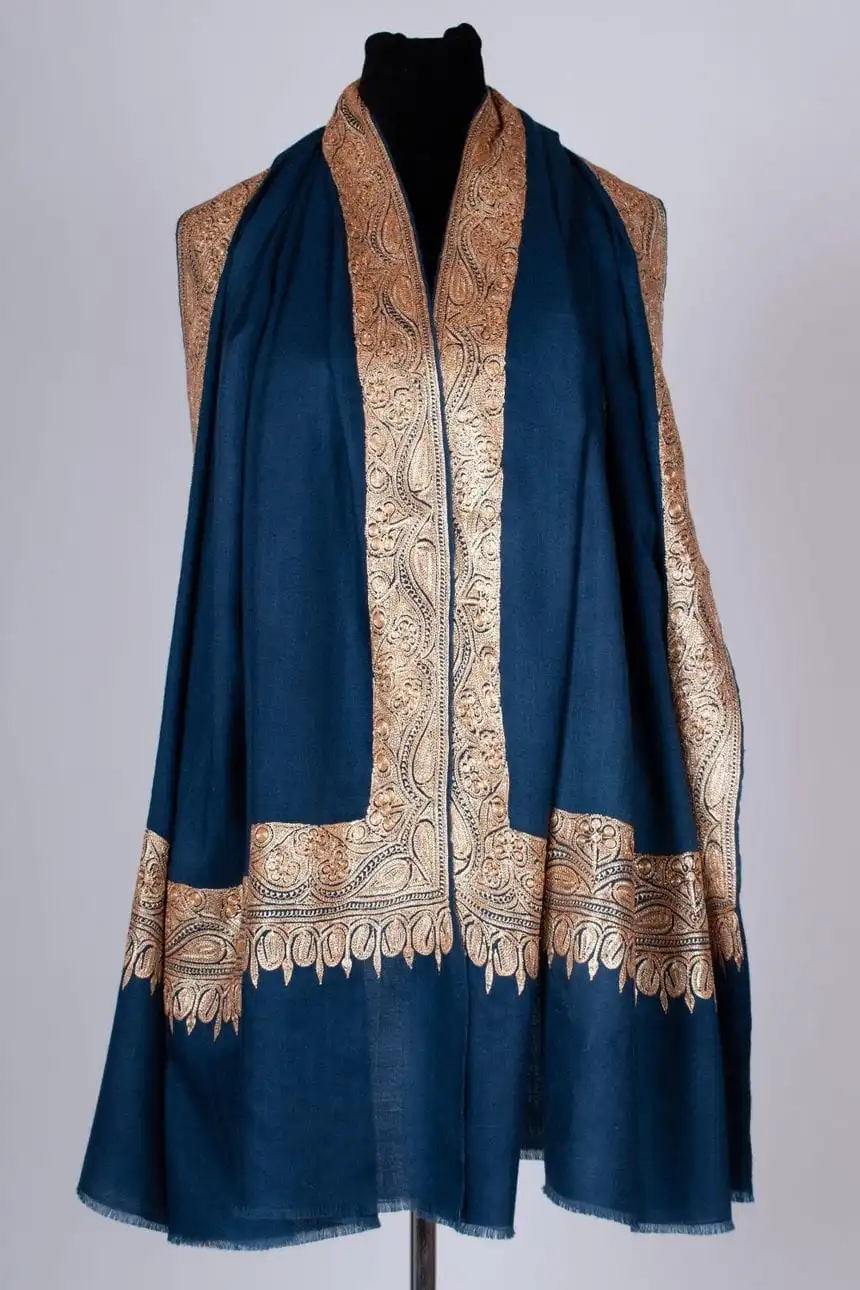
    Pashmina shawls gained much prominence in the days of the Mughal Empire as objects of rank and nobility. Babur first established the practice of giving khilat – giving ‘robes of honour’ – in 1526 to members of his court for their devoted service, high achievements, or as a mark of royal favour. A khilat could be a set of clothes consisting of a turban, coat, gown, trousers, shirts, etc., all of which could be made of Pashmina wool.

    Upon the complete conquest of Kashmir in 1568 by Akbar, a pair of pashmina shawls was an integral part of a khilat ceremony. Other emperors of the time, such as the Safavid and Qajars, also wore and gifted pashmina shawls within their political circles.

    Pahsmina shawls and blankets were indicators of wealth and part of a rich woman’s dowry in India, Nepal, and Pakistan. These shawls acquired the status of heirlooms that would be inherited instead of being purchased, as it was considered too expensive to buy. Through extensive trade with Indian, the shawls made their way to Europe, where they became an almost instant hit.

    Every winter, the goats from whom pashmina is acquired shed their coat. About 80-170 grams of wool is shed. In the spring, the undercoat is shed, which is collected by combing the goat instead of shearing them, as is the case with other wool collection activities. The pashmina wool is produced by the people known as the Changpa, a nomadic people who inhabit the Ladakh region. The Changpa rear sheep in a harsh climate where the temperature drops to −40 °C.

    Raw pashmina is exported to Kashmir, where the combing, spinning, weaving, and finishing are traditionally carried out by hand by a specialised team of craftsmen and women. The major production centre of pashmina shawls is in the old district of Srinagar. It takes about 180 hours to produce a single piece of pashmina shawl.

    Kani shawls
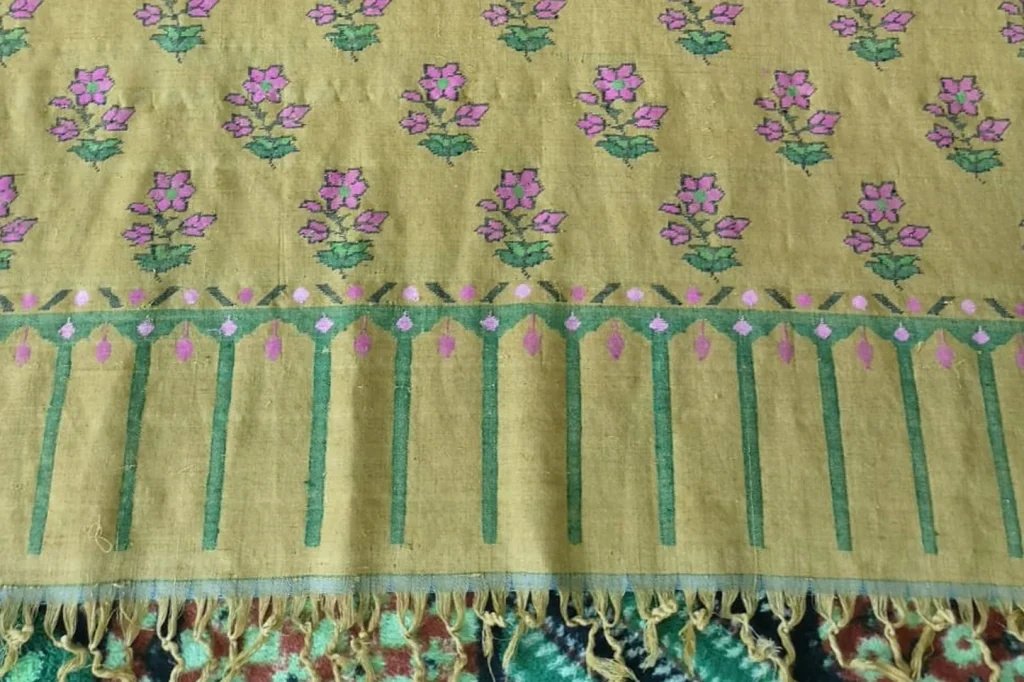
    Kani shawl is made from pashmina on a handloom. But instead of a shuttle used in regular pashmina shawls, Kani shawls use needles made from cane or wood. The distinguishable, Mughal patterns, usually of flowers and leaves, are woven into the fabric like a carpet, thread by thread, based on the coded pattern called ‘Talim’. The talim guides the weaver in the number of warp threads to be covered in a particular colored-weft. The Kani shawls are made from Pashmina Yarn.

    It is considered that it is the best Shawl you can ever buy. The undercoat of the Pashmina Goats that they shed in the spring is naturally collected by the local artisans, is used to make the most expensive fabric on earth. The Changthangi goats that reside in the cold desert area of Ladakh grow an undercoat to sustain the temperature of winter (which goes up to -40° C) in the region.

    Those soft hairs are separated and cleaned to prepare for yarn spinning. Then the artisans, mostly women, hand spin the hair to make the delicate Pashmina wool in their Charkhas. After making the yarn, it is time to weave the shawl. The difference from other Pashmina shawls with Kani Shawls starts from here. It does not use the shuttle like regular Pashmina weaving, but cane or wooden needles are used to weave it. 

    The designer is known as the naqash who creates the pattern of the shawl. In designing, a huge influence of the Mughal Era can be seen. It is quite similar to the flowers and leaves that are woven into the carpet. The naqash first draws the design on the graph paper and then fills it with colors.

    The weavers are the craftsmen who bring the design to life with the help of the stick needles that are loaded with different colors of yarns. Surprisingly, there is no embroidery, but the design is woven into the texture of the shawl. That is the exclusiveness of it. Even no bobbin shuttles from one side to another to make the wrap. The needles that are called Tujis, with different colors of yarns, are inserted at different points of the thread spread.

    Families who are weaving Kani Shawls usually work patiently, working between 5 and 7 hours a day, in between attending to their household chores. Depending on the intricacy and complexity of the design being woven, an artisan can weave a maximum of a few centimetres per day. Depending on the design, size, and detailing, a Kani Shawl may take anything between 6 and 18 months to be completed.

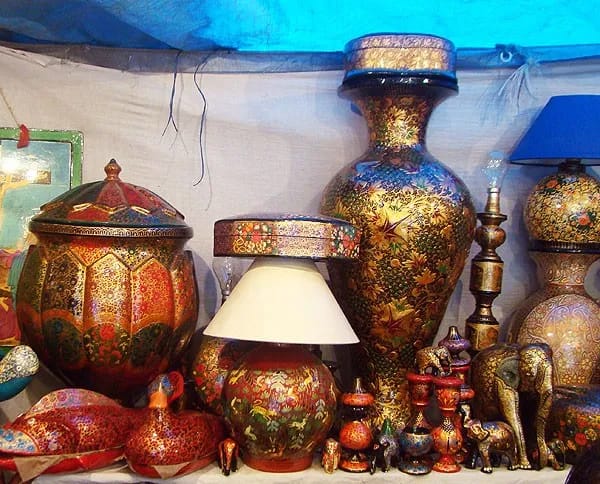
    Papier Mache Art
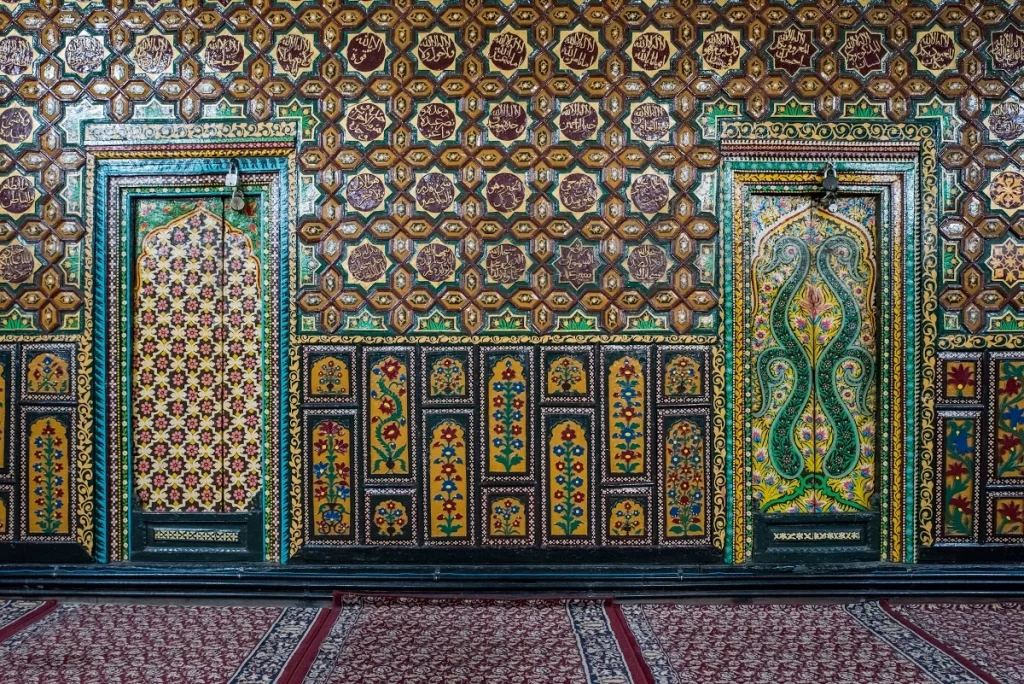
    Papier-mache, among these handicrafts, is an age-old craft that was introduced to the valley by Mir Sayyid Ali Hamadani, who arrived from Persia with skilled craftsmen in the 14th century. The Sufi Muslim Mir Sayyid Ali Hamadani, also addressed honorifically throughout his life as “Shah-e-Hamadan,” meaning “King of Hamadan,” was instrumental in spreading Islam in the region and introducing many crafts and industries to Kashmir.

    With the advent of Islam, papier-mache became one of the core artistic professions, holding considerable religious relevance in the valley. It is one of the oldest handicrafts, which is deeply interwoven with the culture and tradition of Kashmiri society and whose legacy has been passed from one generation to another for centuries. Besides, it generates employment for hundreds and thousands of Kashmiri households. The locally manufactured papier-mache products are brought to local retail shops and tourist attractions for sale and are also exported to international markets, mainly in Europe.

    Papier-mache is a French word that means chewed paper, and the process of making it involves two steps: Sakhtsazi and Naqashi. Sakhtasazi, the initial stage of preparation, includes the making of the figurine from the mixture of paper pulp with the help of rice straw and copper sulfate. In the final step of Naqashi, several coats of paint are applied, and the figurine is decorated. Artists prefer to use organic colors to paint their mesmerizing products. The entire procedure, which is done manually, requires much care and deliberation and is tedious and time-consuming.

    Kashmiri Carpets
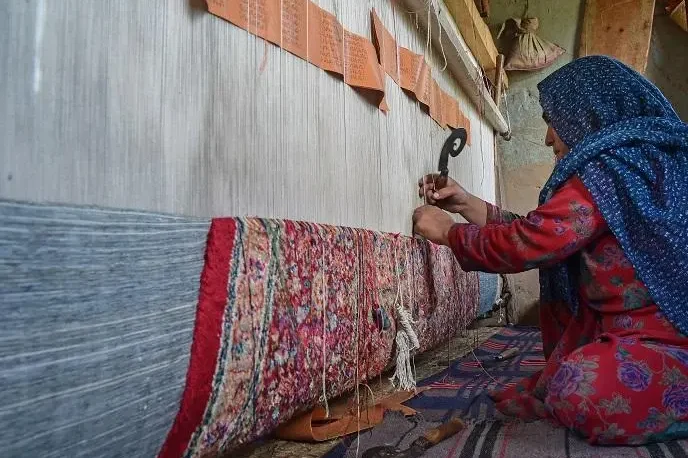
    The Kashmiri Carpets are famous not only in India but across the globe.  Kashmiri Carpet is known for its specialty of being handmade, and similarly, it is knotted and not tufted. The idea of carpets is nearly 1500 years old, and it is not exactly known where and by whom the first Carpet was made. However, in India, Carpet weaving was first introduced in Kashmir in the late 15th Century by King Budsha, who brought artisans from Persia to train the people in Kashmir to spin and weave Carpets.

    Though the people of Kashmir were already introduced to weaving and spinning, the King insisted on their learning the technique from the Persians. The art of Carpet weaving in Kashmir is passed from one generation to another, and most of these traditional weavers prefer to hand weave the Carpets in spite of many new mechanized processes which have come up..

    The process of Kashmiri Carpet making is quite laborious, for it involves a lot of time and different steps, starting right from the cultivation of silk or wool, treating and dyeing it, deciding the pattern of the carpet, weaving, and then adding the final touches.

    Nakaash is the person who designs the Carpet, a Kalimba is the weaver, and the ranger is the person who dyes the Carpet in the local Kashmiri language. In the making of the Carpet, the weaver follows the Talim chart, which is a coded colour chart. This chart indicates the number of knots which has to be woven according to the planned colours. As the day starts, the master weaver reads out the code, and the assistants follow the instructions carefully.

    Sozni and Ari Embroidery
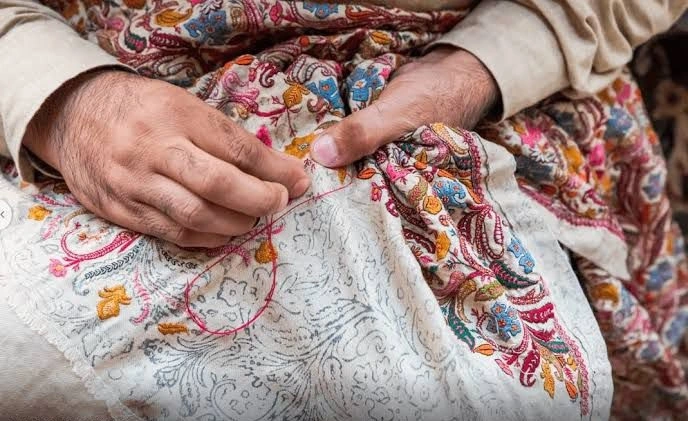
    Sozni (also known as Sozan Kaari) is a popular needlepoint embroidery technique from the Kashmir valley in Northern India. Kashmiri artisans have been practicing Sozni embroidery for almost 500 years. It’s mainly done in woolen and silk fabrics and is very famous for its use in Pashmina Cashmere shawls and jackets. The interesting fact about Sozni embroidery is that its intricacy can vary from 5 stitches per cm to 500 stitches per cm.

    • Capturing the design on a tracing paper- The Naqash (Designer) makes the design on a tracing paper. The designs are created either by a senior embroidery kaarigar (craftsman) or by designers.
    • Capturing design trace into carved wooden blocks- Once the trace is perfectly done, a wooden block is carved out to make blocks, which would be used to create imprints on the fabric.
    • Filling the blocks with charcoal paste or chalk paste- The blocks are filled with either charcoal paste or chalk paste to impart black or white colour to the imprinted design.
    • And then the Embroidery work starts- Once the design is imprinted on the fabric, the embroiderer uses a fine needle and thread to make the embroidery. The thread is usually of silk or a high-quality cotton. The main point to note here is that only the artisan who starts the embroidery finishes the embroidery, as embroidery making is just like handwriting, and the end result varies from person to person.
    • Finishing- Once the embroidery is done, the shawl goes through cleaning and the final finishing process.

    Aari embroidery is a traditional style of embroidery seen on Kashmiri dresses. The Aari practice is a very time-consuming process.

    However, with the help of technology, the embroidery process has become quicker and easier. Aari work is executed using a hooked needle, Aari, which is placed under the fabric and is used to pull a chain of loops, each rising from the previous in continuous succession.

    Products created through Ari work are stoles, shawls, pheran, kurta, and capes. This embroidery style started with a basic method of drawing designs on cloth and piercing holes along the lines of the design with a needle. The fine stitched patterns evolved into Aari work as an individual art form over time.

    Wood Carving and Walnut Wood Furniture
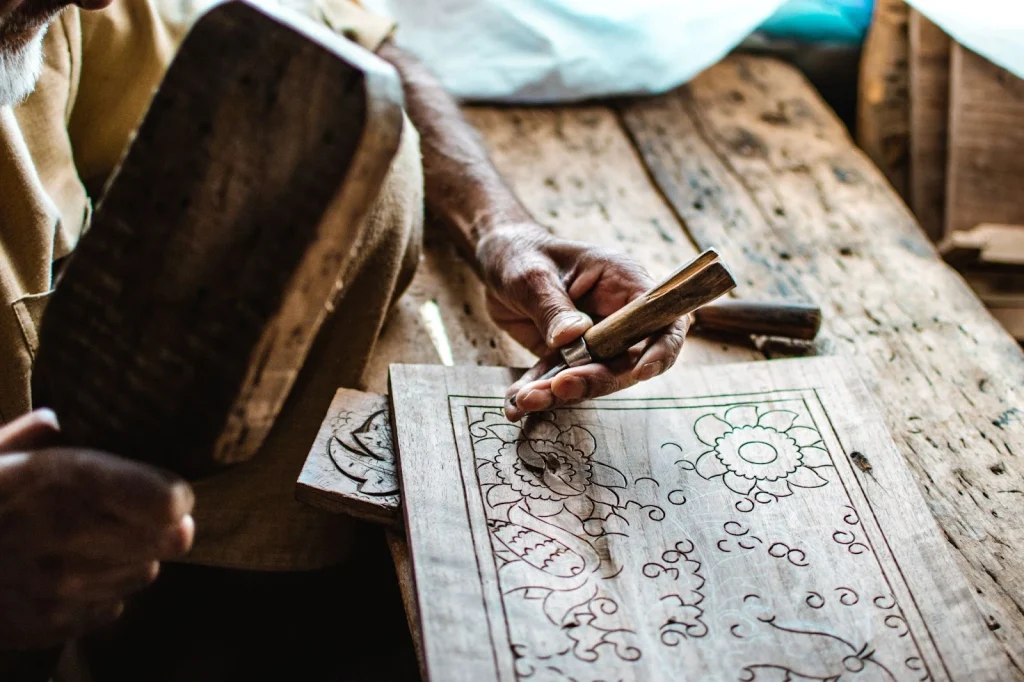
    Walnut wood carving is an ornamental and delicate craft process that is unique to Kashmir due to the concentration of walnut trees in this region.

    Carved walnut woodwork is among the most important crafts of Kashmir. Kashmir is now one of the few places in the world where walnuts are still available at an altitude of 5500–7500 feet above sea level. The wood is hard and durable, its close grain and even texture facilitating fine and detailed work. It also presents visually interesting effects with mere plain polished surfaces.

    The Kashmir craftsman rejoices in carving intricate and varied designs. A variety of carved products bear recurrent motifs of the rose, lotus, iris, bunches of grapes, pears, and chinar leaves. Dragon motifs and patterns taken from kani and embroidered shawls all find their place in wooden objects with deep relief carving.

    Wood used for carving can be from the root or trunk of the tree. The wood derived from the root is almost black, with the grain more pronounced than the wood from the trunk. Branches have the lightest color with no noticeable grain. It is the dark part of the wood, which is best for carving, as it is strong. The value of the wood differs with the wood from the root being most expensive.”

    Walnut trees are of four varieties. ‘Wantu’ or ‘Vont Dun’ (fruit has hard shell), ‘Dunu’ and ‘Kakazi’ or ‘Burzol’ (best fruit with lightest shell), which are cultivated, while the ‘Khanak’ is found in the wild. These can be cut only once they mature to give fruit.
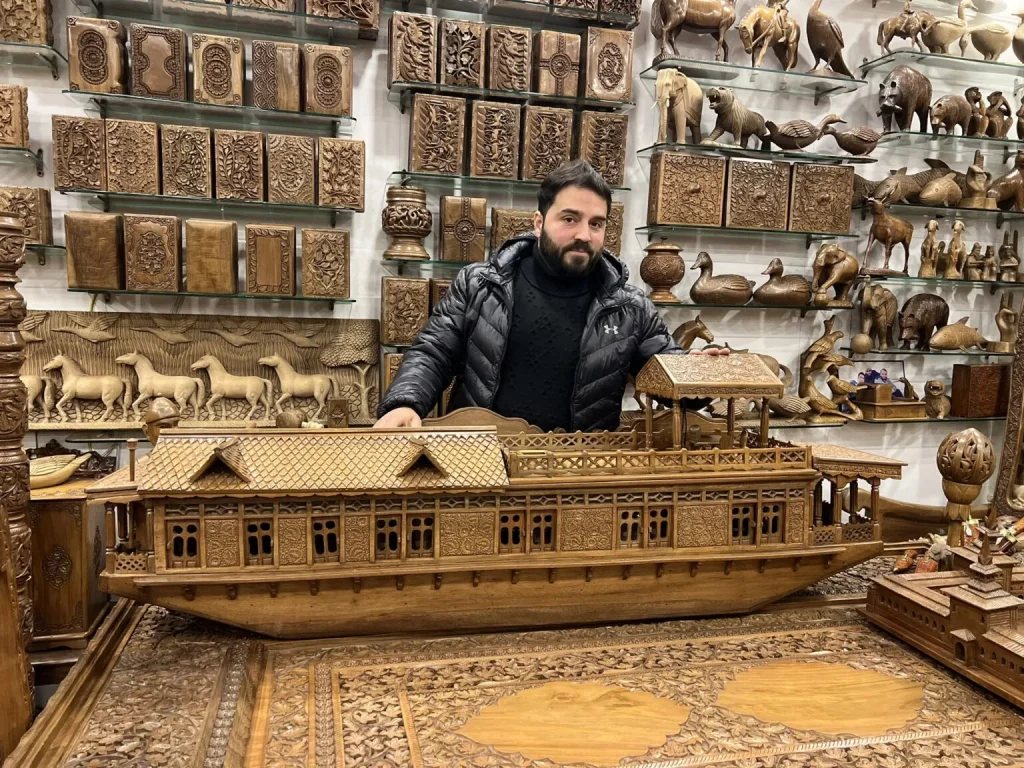
    The wooden planks so obtained are then numbered (dated) and piled one upon the other. The process is always carried out in the shade. The gaps between the different layers of the planks allow the passage of air, which helps in the seasoning process. Seasoning goes on for 1 to 4 years.

    The naqqash, master carver, first etches the basic pattern onto the wood. And then removes the unwanted areas with the help of chisels. And a wooden mallet so that the design emerges from the lustrous walnut wood as an embossed surface.

    The carving of furniture and smaller items is an elaborate process and involves a high degree of skill and craftsmanship.

    Copperware (Kandkari)
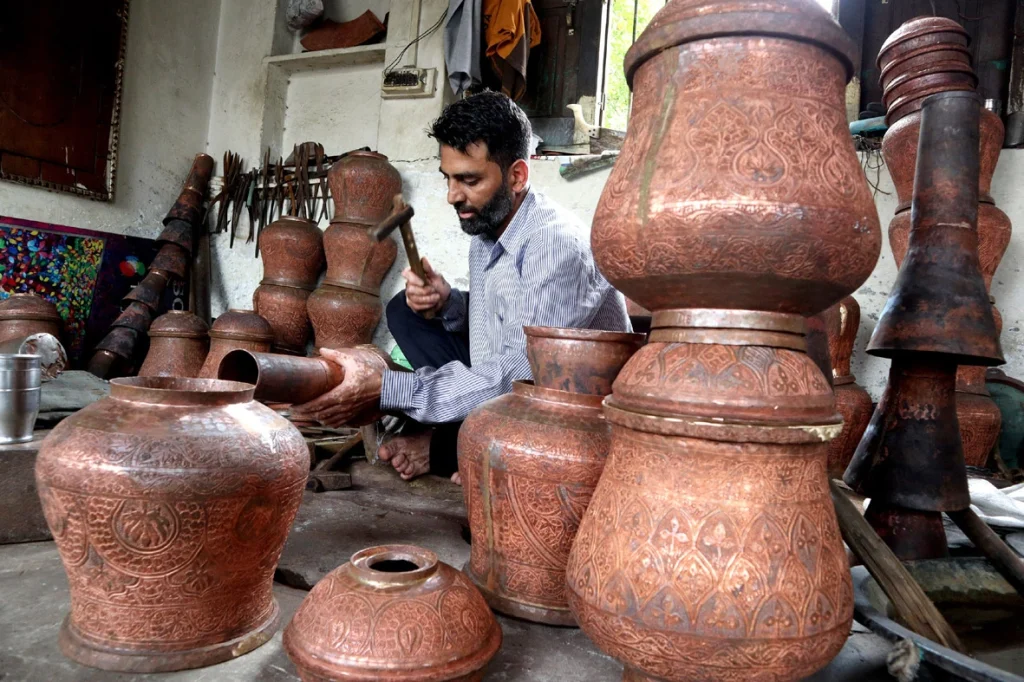
    Kashmir is a treasure trove of handicrafts, heritage, and natural beauty. Among the elegant treasures Kashmir possesses, Kashmiri copper works. Locally known as Kandkari works. Copper, locally known as tram, has been an indispensable commodity in Kashmir for ages. The age-old art of crafting copper works is deeply rooted in culture here and is famous all over the world.

    The craftsmanship of Kashmir is known for the work of engraving and making household items. Decorative products like copper, including utensils like a pot, a Big plate, a water jug, a portable hand washing system, and the most famous Kashmiri Samovar. Copperware requires an ample amount of time and labour, and the making process is slow and difficult. 

    The process of making crafted copper items goes through many hands (Artisans), who are specialised in a particular technique. The process involves the smith (locally known as “Thanthor”). The engraves (locally known as “Nakash”). The gilder (locally as “Zarkood”). The polisher (locally known as “Roshengar”). The cleaner or finisher (locally known as “Charakgar”).

    Namda and Gabba Rugs
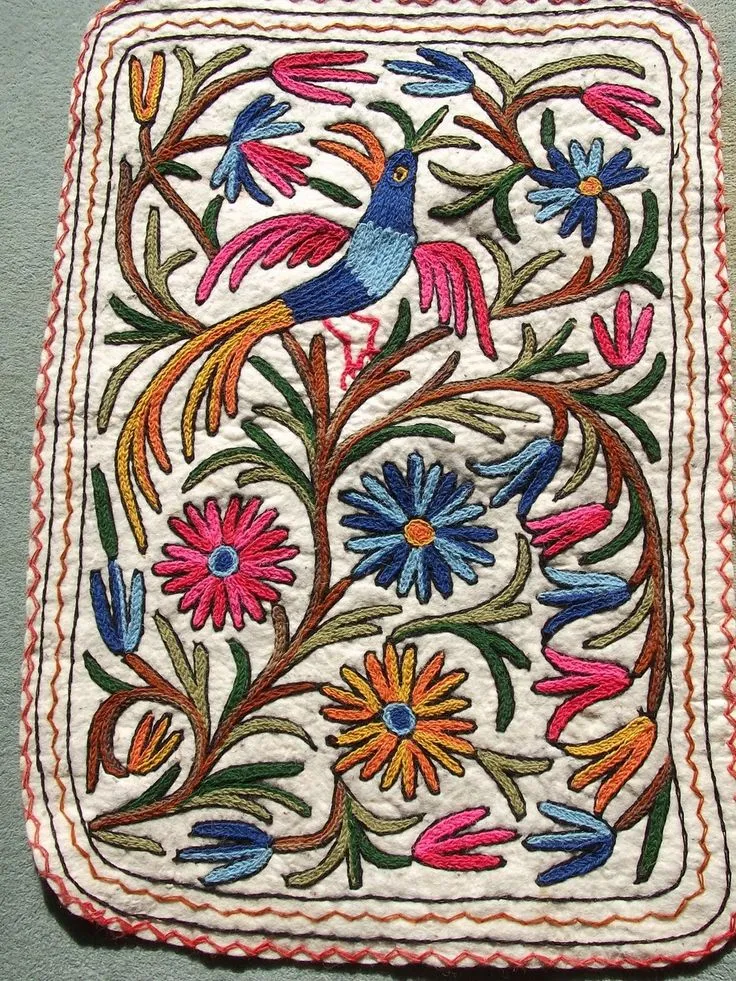
    Namdas: These are similar to miniature carpets but less costly than carpets. They are prepared from cotton or wool fibres, which are manually pushed into shape. Prices fluctuate with the percentage of wool. A Namda containing 30 per cent wool is less expensive than one that contains 75 per cent wool. Namdas are famous for their bright colours and attractive designs.

    Gabba rugs: Gabba is finished from old woollens on which dissimilar colours cut out forms are held with chain stitches. The ends and the field are enclosed with hefty embroidery. These rugs are generally made of 65 percent wool or silk yarn and 35 percent cotton yarn. The bottom of the rug is hessian cloth in pastel colours and is backed by cotton cloth on the surface. Kashmiri needlework is done the motifs that are traditional Kashmiri floral patterns.

    Role of Kashmiri Handicraft in the local economy

    Handicrafts have a special socio-economic significance in J&K, keeping in view the vast potential in handicrafts for economic activities. Against an allocation of a mere Rs. 19.50 crore in 1974-75, the budgetary allocation for this sector has been increased to Rs. 24 crore during 1998-99.

    Production of handicrafts crossed the Rs. 400 crore mark during 1998-99. There has also been a notable growth in the State’s exports in recent years. The traditional woollen shawls, papier-mache goods, wood-carvings, and carpets have all survived the onslaughts of many centuries of socio-economic evolution. The craft objects of Kashmir are ingrained in the socio-economic ethos of the people.

    The State government has introduced two insurance schemes for the benefit of artisans. Schemes like Health & Group Insurance provide the facility of treatment and replacement of any defective organ of the artisan and Rs. 10,000 in case of death to the next of kin. Artisans have been brought within the ambit of the Cooperative Movement. As many as 873 craft cooperatives engaging over nine thousand craftspeople have been launched throughout the State.

    Challenges Faced by Kashmiri Artisans

    Kashmir is known for its vibrant and diverse artistic heritage, which has been passed down through generations of skilled artisans. However, these artisans face numerous challenges in today’s globalized and modernized world. Globalization and modernization on their own have had an impact on work. Kashmiri artisans have made their name worldwide for their skill. Producing a wide range of handicrafts, including shawls, carpets, papier-mache, and embroidery.

    However, these traditional crafts are increasingly being threatened by competition from mass-produced goods and modern technology. One of the main challenges faced by Kashmiri artisans is the lack of infrastructure and support for their work. Many artisans work in small, home-based workshops without access to modern tools or resources. This makes it difficult for them to compete with large-scale producers who have access to modern machinery and technology.

    In addition to these challenges, artisans are also faced with changing consumer preferences. Modern consumers are increasingly drawn to large-scale goods, which are cheaper and more readily available as compared to traditional handicrafts. This has made it difficult for traditional artisans to market their products and compete in the global marketplace.

    Despite these challenges, there has been some success in the traditional artisan sector. Many artisans have adapted to techniques incorporating modern materials and designs, while still maintaining the traditional elements of their craft. Others have found success by focusing on niche markets, such as high-end luxury goods or eco-friendly products.

    Conclusion

    Handicraft is an integral part of the life of a Kashmiri, and social and technological changes are taking place. In other parts of the world, artisans are rich. And they create craft items that are considered to be luxury items.  But in  Kashmir,  it is a major source of employment for a majority of the population, next to tourism. 

    In simple words, Handicrafts can be rightly defined as the products made by hand. Culture and tradition are the invisible part of the creator, and hence, culture and crafts are always intertwined.  Kashmir’s rich cultural heritage is manifested by the wide array of handicrafts produced.
  • Kashmiri Monuments:The Architecture Treasures of Kashmir

    Kashmiri Monuments:The Architecture Treasures of Kashmir

    Amidst the awe-inspiring beauty of the Himalayan landscape, Kashmir has been renowned for its mesmerising charm and diverse cultural heritage. Yet, beneath this picturesque exterior lies a heartrending truth- a sorrowful trail of disappearing customs that once defined the essence of this historic region.

    With each passing day, Kashmir witnesses the slow erosion of its cherished culture, heritage, language, and culinary treasures. Centuries-old customs that once bound communities together are now slipping away into the sands of time. The vibrant threads of Kashmiri identity, woven delicately through generations, are now at risk of fraying.

    “Kashmir is renowned as one of the most breathtaking places on earth, often called the crown of India. The origin of Kashmiri culture and heritage is a complex and multifaceted journey that spans thousands of years. The region of Kashmir has been a melting pot of various influences and civilisations, contributing to its unique cultural identity. It has a rich history dating back 5500 years, with 4000 years of Hindu rituals, customs, and the Sanskrit language being prevalent. This was followed by a 1200-year Buddhist period.”

    Conservation of Heritage sites in India is important because:

    Conservation of heritage sites and buildings provides a sense of identity and continuity in a fast-changing world. Heritage sites and buildings represent the past history and culture of a nation. It is important to support the tourism industry. A heritage site is a place that preserves the cultural, social, and political history of a place.

    Plan your tour to the Kashmir valley to explore all these ancient monuments of Jammu & Kashmir. These landmarks indicate different history, represent the most beautiful Indian architecture, and offer an exquisite view of gardens & mountains.

    Historical Background of Kashmir Monuments

    Myth is deeply related to the cultural history of Kashmir. Since the beginning of Kashmir’s history, the myth (Purakatha) has held a great place. The origins of Kashmir, starting from the geographical location, the presence of public life, the construction of rivers, lakes, shrines, temples, mosques, and all matters of religious and societal transformation, are closely related to myth and legends. In some cases, the myths also focus on the views of the individual or the ruling classes. There are many myths, legends, and miraculous facts about the Rishi and Sufi saints in Kashmir.

    Buddhism played a significant role in the traditional culture of Kashmir, as evidenced by the Nilamata Purana and Kalhana’s Rajatarangini. Although it was widespread in Kashmir long before Emperor Asoka’s time, and enjoyed the patronage not only of Buddhist rulers but also of Hindu rulers, it is generally believed that Buddhism did not become the dominant religion in Kashmir until the time of Emperor Ashoka. However, this is not the case. It began in Kashmir and quickly expanded to the surrounding regions of Ladakh, Tibet, and China.

    The book known as the Rajatarangini, along with the writings of three Chinese travelers who travelled to Kashmir between the years 630 and 760 AD, both provide tales of the monarchs of Kashmir’s support of Buddhism. According to many Buddhist texts, the introduction of Buddhism to Kashmir can be traced back to Majjhantika, a monk from Varanasi who was also a pupil of Ananda. According to the Ceylonese Chronicle, after the Third Buddhist Council came to a close, Ashoka dispatched missionaries to various kingdoms so that Buddhism could be disseminated throughout the world.

    Majjhantika was dispatched to Kashmir and Gandhara (modern day Afghanistan). The tale of Majjhantika can also be found recounted in a number of other Buddhist writings, including the Ashokavadana and the Avadanakalpalata, for example. The Buddhist literature known as the Divyavadana, on the other hand, claims that Emperor Ashoka summoned a number of monks from Kashmir to Patliputra (present day Patna, Bihar).

    Following the decline of Buddhist influence, Kashmir saw the rise of powerful Hindu dynasties. The most notable among them was the Karkota dynasty, especially during the reign of Lalitaditya Muktapida (8th century CE). Under his rule, Kashmir witnessed a golden age of architecture, sculpture, and religious tolerance.

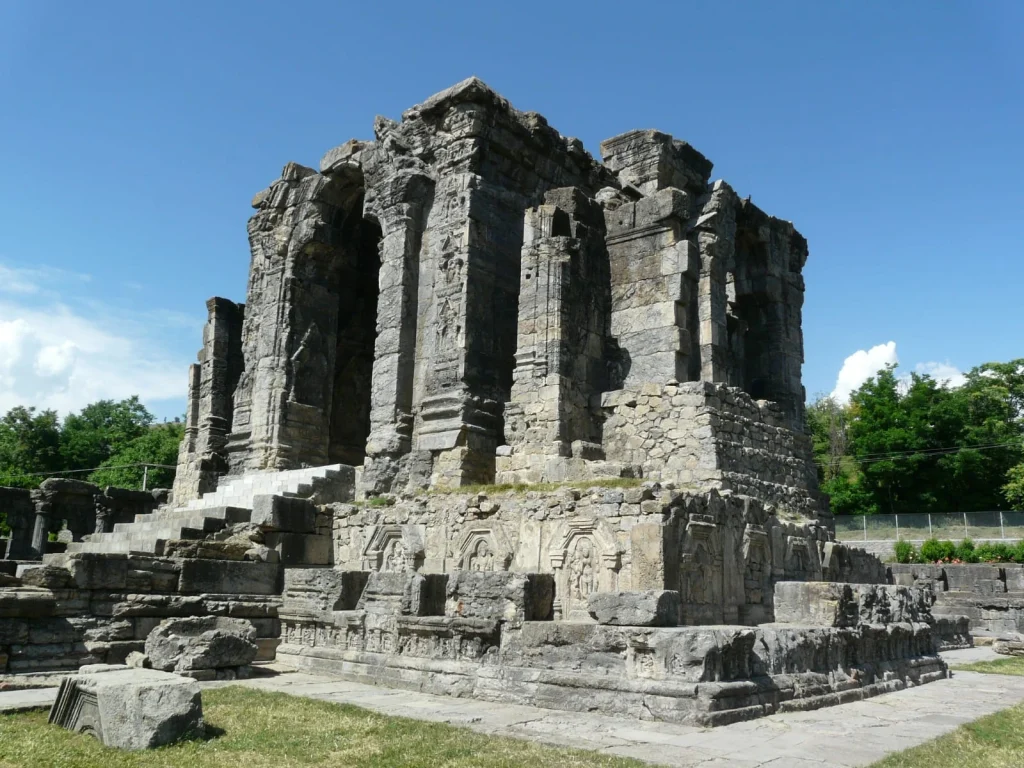
    He is credited with constructing the famous Martand Sun Temple, one of the most iconic ancient Kashmir monuments, which reflects a blend of Gandharan, Gupta, and Kashmiri architectural styles. Later, the Utpala and Lohara dynasties continued to rule the region and patronized Shaivism and Vaishnavism. Numerous temples and shrines were built during this period, contributing to the region’s rich religious heritage.

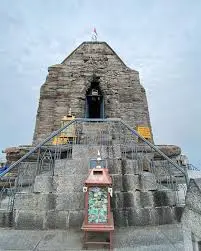
    Shankaracharya Temple: A Sacred Kashmir Monument Overlooking Srinagar

    Sultan Sikandar, the ruler of Kashmir, destroyed the Shiva Lingam of the temple and several other idols of the Gods. Later, different rulers restored the temple at different times because of natural disasters and several attacks.

    According to popular belief, several kings have repaired this temple over a period. The temple was rebuilt and renovated by King Godapatta in the first century AD, and he dedicated this temple to Jyeteshwara. 

    King Gopaditya (426-365 BC) and King Lalitaditya (697-734 AD) carried out later renovations. Gulab Singh of the Dogra dynasty renovated the Durga Naag shrine on its premises. The King of Mysore installed electric fittings in the temple in the modern period. In 1961, the Shankaracharya of Dwarkapeeth installed the statue of Adi Shankaracharya.

    The current structure of the temple traces its origin to the 9th century AD during the reign of the Sikhs. It was when the Shivalinga was placed in the temple. The Sikh rulers revived the fortunes of this temple with regular prayers and festival celebrations.

    The temple is also called Bagh-i-Sulaiman by the Jews and the Persian community. Evidence indicates that this temple belongs to ancient times, as scholars have found various Persian scriptures here.

    Martand Sun Temple: Ancient Hindu legacy among Kashmiri Monuments

    The Archaeological Survey of India has classified Martand Sun Temple with the recognition as an ASI-protected site. Anantnag town, located at an altitude of approximately 5,400 feet above sea level, seems to be approximately 33 miles from Srinagar and seems to be easily accessible by road. 

    The Martand temple is located on a plateau with a panoramic view of the entire Kashmir Valley. Dedicated to Vishnu-Surya, the Martand Temple has three distinct chambers—the mandapa, the garbhagriha, and the antralaya—probably the only three-chambered temple in Kashmir. 

    This is a columned medieval temple with a monument in the centre and a yard. It contains 84 column-like structures, which are a holy Hindu figure, and offers stunning views of the surrounding valleys. 

    This points to the position it enjoyed. The temple is built in a unique Kashmiri style. The temple is also influenced by Classical Greco-Roman, Buddhist-Gandhara, and North Indian styles.
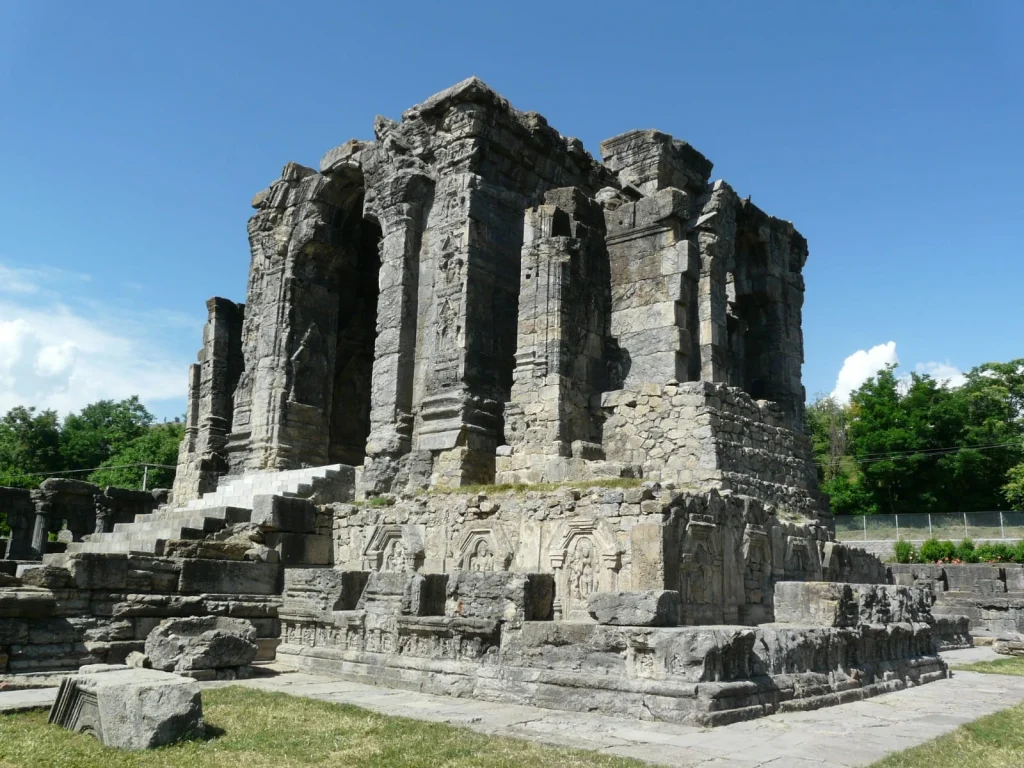
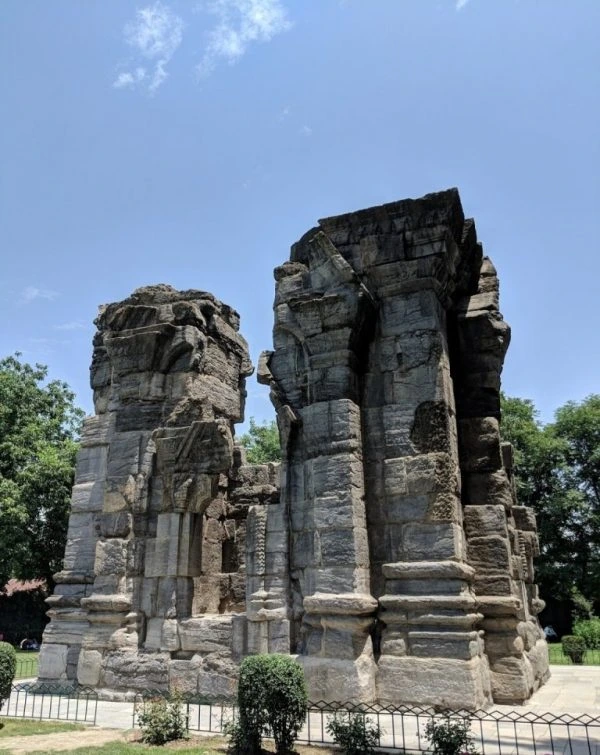
    The temple possesses far more imposing dimensions than any other existing temple, being 63 feet long. As an isolated ruin, this deserves on account of its solitary and massive grandeur, to be ranked, not only as the first ruin of the kind in Kashmir but as one of the noblest amongst the architectural relics of antiquity that are to be seen in any country.

    The principal shrine is at the centre of a quadrangular courtyard, flanked towards the north and south by two small structures. The temple walls are built of huge blocks of evenly dressed grey limestone by making use of lime mortar. 

    The magnificent Martand Sun Temple, located amongst the woods in the region of Mattan within Kashmir’s Anantnag Province. It still makes for an impressive sight with the formidable grey walls standing stark against the blue sky, broken grey fragments strewn around the green grass. Some of the walls bear clear carvings of deities, and the beauty and symmetry of the temple are still amply evident. The temple is ringed by a row of pillars—the peristyle common in Kashmiri temple architecture.

    Pari Mahal: A Mughal-Era Observatory And Kashmir Monument Of Learning

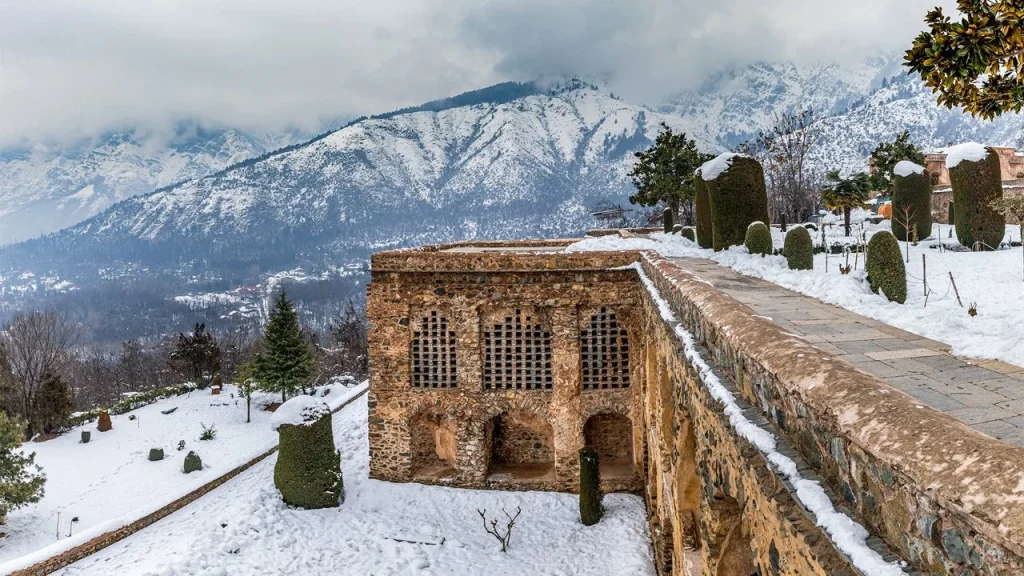
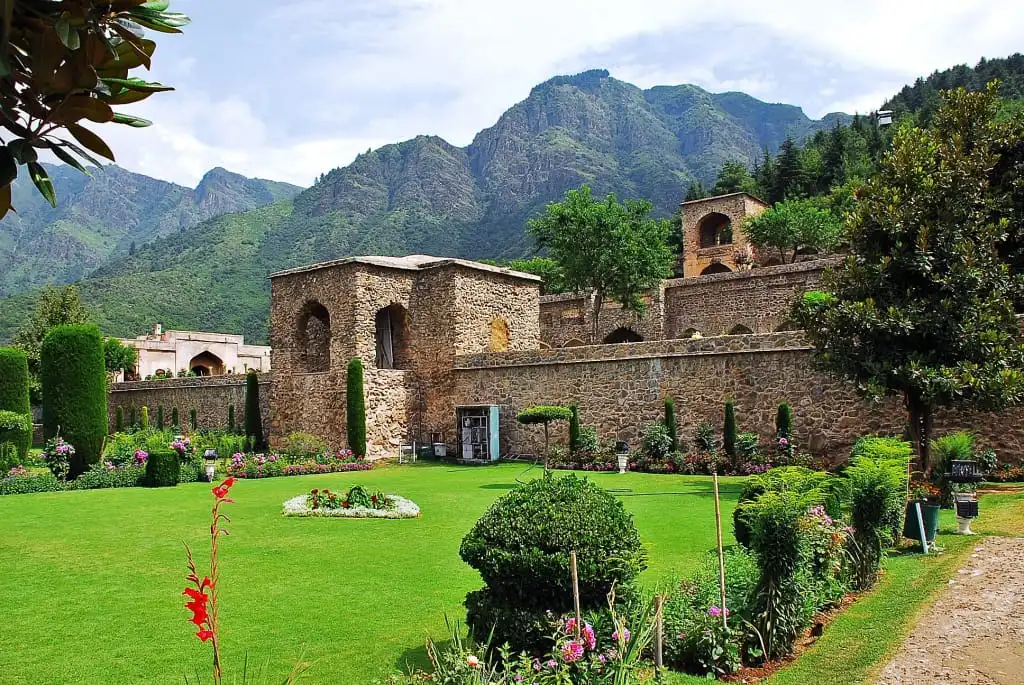
    Pari Mahal or the abode of fairies sits majestically upon the slopes of the Zabarwan mountain range west of Chashma Shahi, around 13.2 km from the Srinagar city centre. It is a garden palace and its construction in mid- mid-1600s is ascribed to Dara Shikoh, the son of Mughal emperor Shah Jahan, who used to study astrology and astronomy here. Prince Dara had a great interest in mysticism, and he got the garden built for his Sufi tutor, Mullah Shah Badakhshi.

    Like other gardens, it has attracted a huge number of tourists over the years for its mysterious yet tranquil ambience. However, unlike other Mughal gardens, it has no water cascades but used to have fountains fed through pipes and tanks made for that purpose.

    Pari Mahal boasts of a unique architecture not found anywhere in the Valley of Kashmir and clearly depicts the immense patronage of art by the Mughal emperor Shah Jahan.

    It consists of six terraces aligned roughly north-south, with the uppermost point at its southern end and arched retaining walls supporting the terraces against the mountain. The garden measures 122 meters by 62.5 meters.

    Pari Mahal can be approached by a road that ends just at the main entrance of the garden. It is a ladder-shaped structure with six terraces. The terraces are accessed via sets of steps on their corners. Each flight of steps measures 6.7 m by 1.3 m. At the center of the sixth, or uppermost, terrace, a water tank with an arched wall is set against the mountain slope. From the sixth terrace, a baradari or pavilion overlooks the lower terraces.

    After remaining in a state of ruin for many years, the garden has been thrown open for visitors after minor renovations. Visible from far away, the structure looks especially intriguing when floodlights are switched on at night. As it lies on the way to other Mughal gardens, it is a must-visit place when you are in Srinagar.

    Hari Parbat Fort: A Historic Kashmir Monument Of Religious Harmony

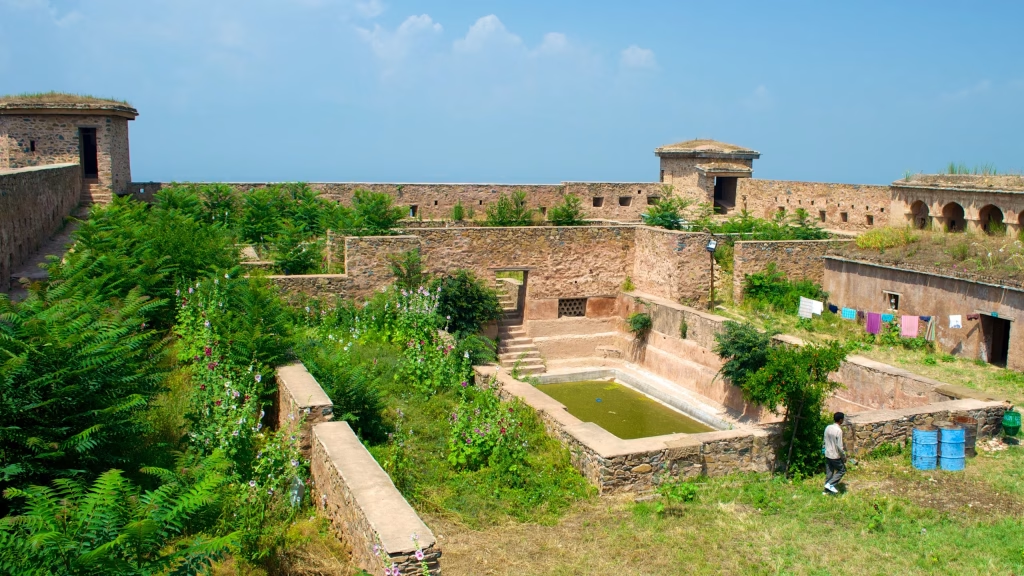
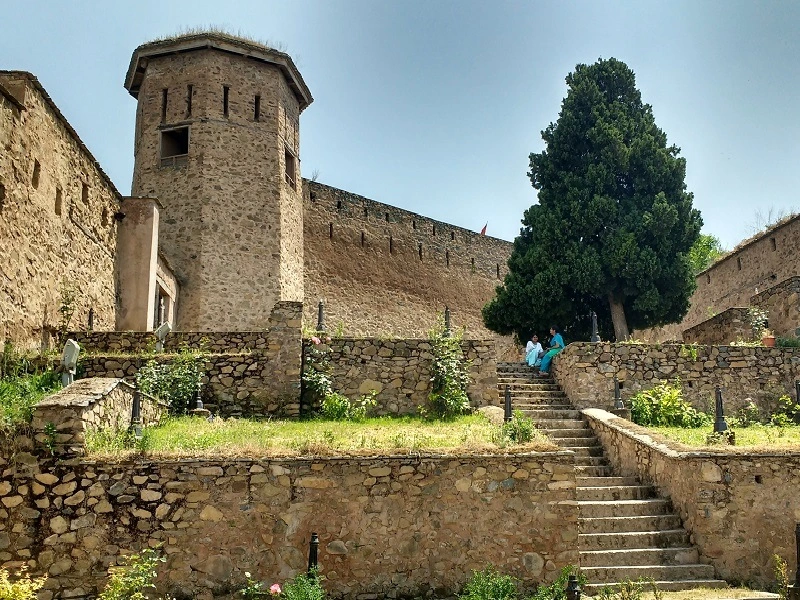
    Hari Parbat, also called Koh-i-Maran, is a hill overlooking Srinagar, the largest city and summer capital of Jammu and Kashmir, India. It is the site of a fort, built in the Durrani era, and of a Hindu temple, mosques, and a gurdwara. The first fortifications on the site were constructed by the Mughal emperor Akbar in 1590, who built an outer wall for the fort as part of his plans for a new capital called Nager Nagor. The project, however, was never completed.
    The present fort was built in 1808 under the reign of Governor Atta Mohammed Khan. Hari Parbat is considered sacred by the Kashmiri Pandits, who also call it Pradyumna Peeth. The hill hosts a temple of Shakti, who is worshipped there under the name Jagadamba Sharika Bhagawati. She is depicted as having 18 arms and sitting in Shri Chakra.
    The southern side of Hari Parbat features Makhdoom Sahib, the shrine of Hamza Makhdoom, a 16th-century Kashmiri Sufi saint locally known as Hazrat Sultan and Sultan-ul-Arifeen. Built below the fort is a mosque dedicated to Shah Badakhshi, a 17th-century Qadiri Sufi saint. The mosque was built by Mughal princess Jahanara Begum.

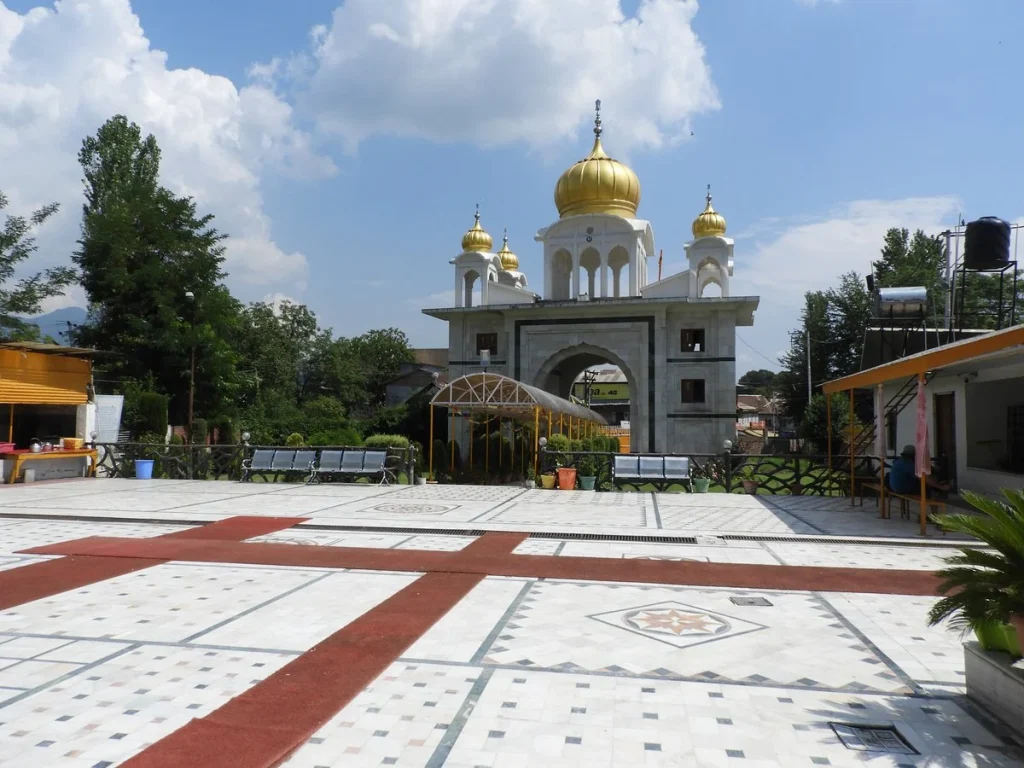
    Gurdwara Chatti Patshahi at Kathi Darwaza, Rainwari, is believed to be the place where Guru Har Gobind, the sixth Sikh guru, stayed for a few days while travelling through Kashmir. Gurdwara Guru Nanak Dev is a place where Guru Nanak sat and had discourse with people in the early sixteenth century. It was earmarked with a pedestal by Mohammad Ata Khan, a general of Akbar, who built the Durrani Fort. A small Gurdwara was later built at the place by Guru Har Gobind.

    Jamia Masjid: A Symbol Of Faith And Architecture

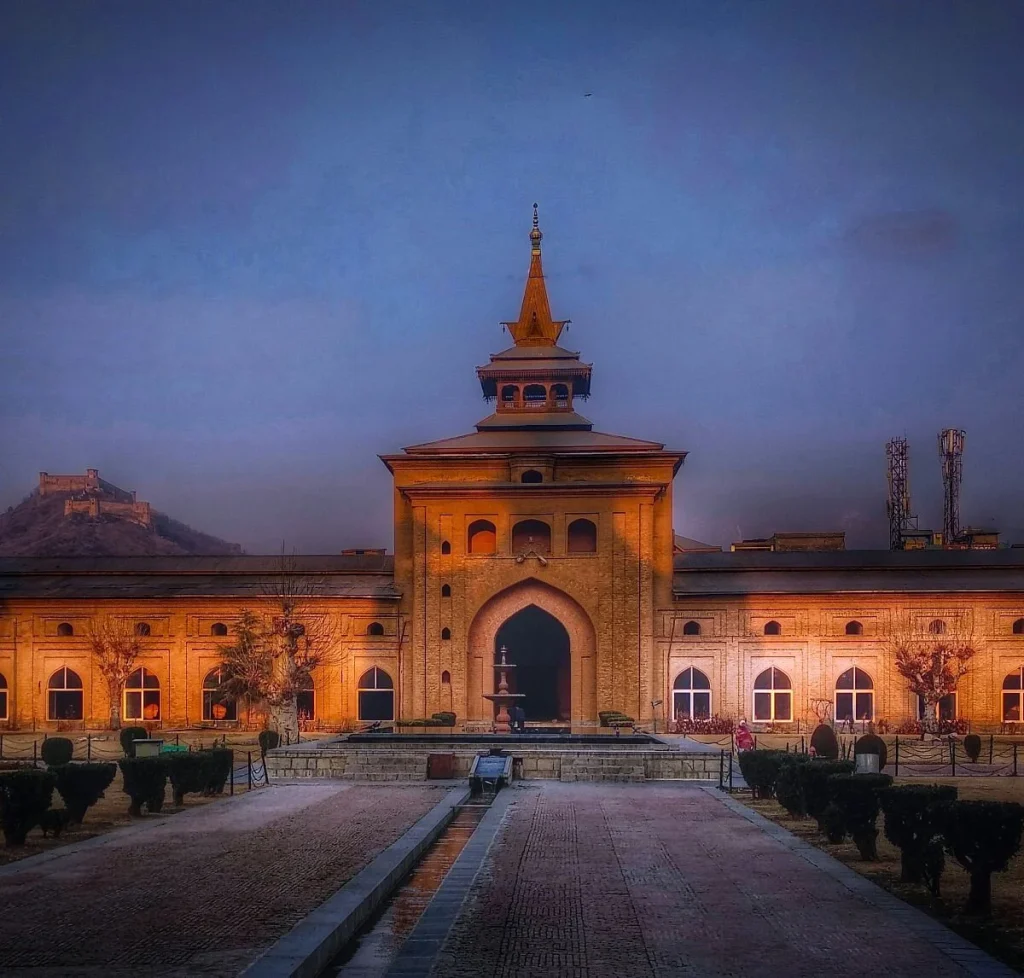
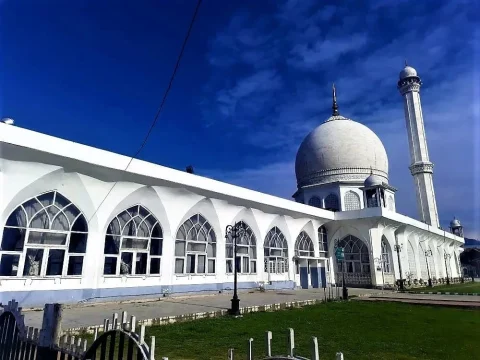
    At a distance of 4 km from Srinagar Bus Station, Jamia Masjid is a religious mosque located in Srinagar, Jammu & Kashmir. Situated at Nowhatta, also called Downtown, Jama Masjid is the biggest mosque in Kashmir Valley and amongst the top places to visit during your Srinagar trip.

    Lying in the heart of Srinagar city, Jamia Masjid happens to be one of the most ancient places to visit in Srinagar. This majestic mosque was built by Sultan Sikandar Shah Kashmiri Shahmiri in 1394 CE, under the orders of Mir Mohammad Hamadani, who was the son of Said-ul-Auliya Mir Sayyid Ali Hamadani, and was completed in 1402 CE.

    Later on, Zain-ul-Abidin, the son of Sultan Sikandar, extended the mosque by adding a turret in the primary structure. This colossal structure has been damaged by fire thrice, but luckily, restoration work was carried out after each mishap to correct the damaged portions. The existing construction was erected by Emperor Aurangzeb after the fire broke out in 1672 CE.

    The architectural style of the Jamia Masjid is inspired by the Indo-Saracenic style of architecture, and also bears certain similarities to the traditional Buddhist pagodas. The structure occupies a total area of 384 x 381 feet and is quadrangular in shape with four turrets. These are in the middle of each side and covered with pyramidal roofs. All of the turrets are interconnected by spacious halls, and a total of 378 wooden columns support the roof. The place can accommodate around 33,333 individuals at one time. 

    The entire structure is surrounded by wide lanes on all four sides and has a square garden in the middle. The entrance on the southern side of the Mosque comprises a recessed portico that further leads onto an inner courtyard. This courtyard is based on the traditional Char Bagh plan and has a tank in the center. The entire courtyard is made up of a pointed-arched, brick arcade.

    Although Jamia Masjid is situated amidst busy markets, the architecture of this place leaves one surprised. Every Friday, the sacred Jama Masjid can be seen thronged by thousands of devotees to offer prayers.

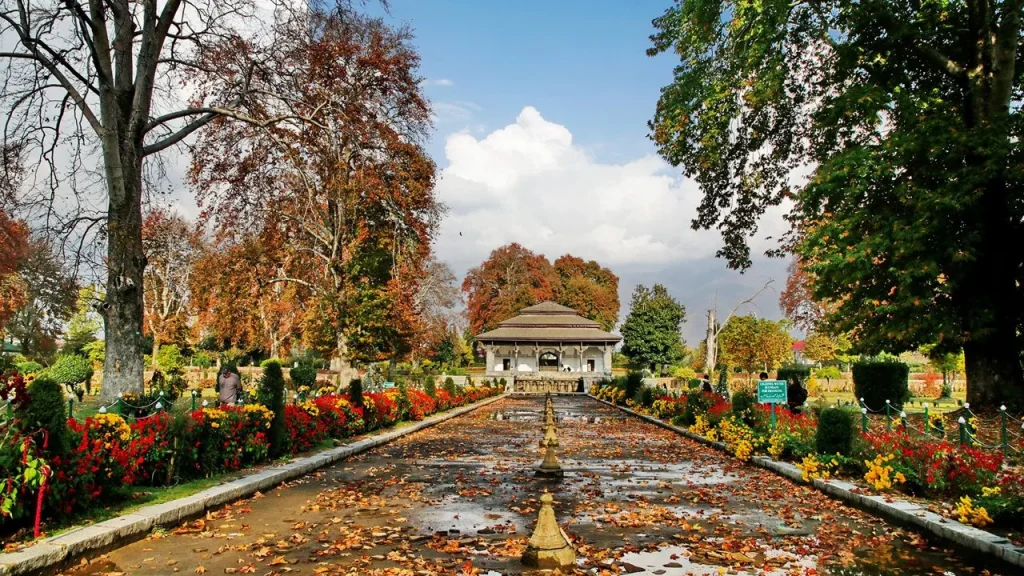
    Mughal Gardens: Nature and Architecture in Kashmir Monuments

    The term ‘Mughal’ comes from a mispronunciation of the word ‘Mongol’ (an Arabic word). The Mughals of India were mostly ethnic Turks, not Mongolians. The Mughal Empire in India was founded by   Babur   (1526-30),   a Central Asian ruler,   descended from the Turco-Mongol conqueror Timur. The  Mughal dynasty ruled the Indian sub-continent for over three centuries. They transformed the culture of the region together with the gardening style and left behind strong marks still seen today.

    The Mughal gardens refer to a particular gardening style brought in by the Mughals following the Persian style of architecture. The style had a heavy influence   of Persian gardens, especially the charbagh (four square) structure, rectilinear layouts within walled enclosures.

    Nishat Garden

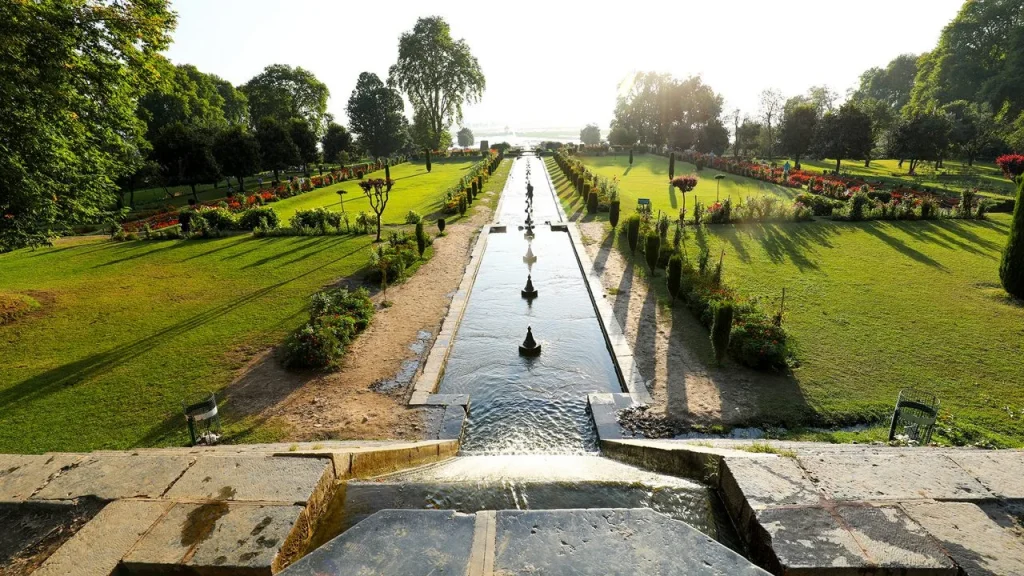
    Nishat Bagh is a terraced Mughal Garden situated on the eastern side of the Dal Lake in Srinagar. This garden is also known as ‘The Garden of Bliss’ and has the Zabarwan Mountains forming its backdrop. The garden was designed and built in 1633 by Asif Khan, Brother of Noor Jahan.Noor Jahan. Nishat Bagh has 12 terraces representing the zodiac signs and offers splendid views of the Dal Lake and far distant snow capped mountain ranges of Pir Panjal.

    Shalimar Bagh

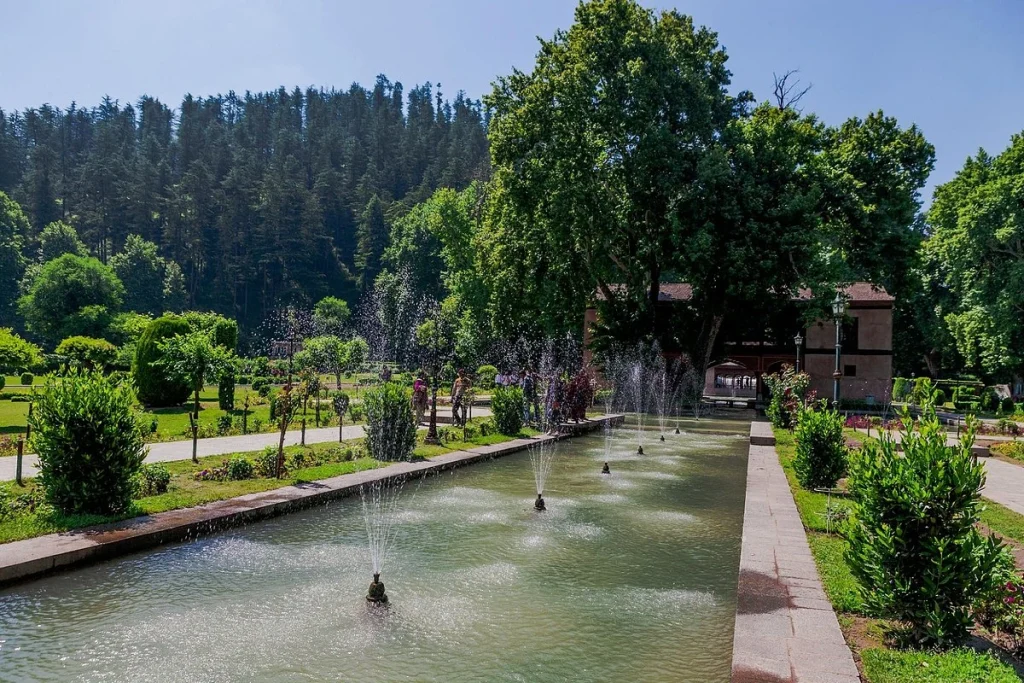
    Shalimar Garden or Shalimar Bagh in Srinagar is the largest Mughal garden in Kashmir valley, built by Mughal Emperor Jahangir in the year 1619 AD for his wife, Empress Nur Jahan. The term Shalimar comes from the Sanskrit language, which means “Adobe of Love”. This famous garden is situated on the right banks of Dal Lake, and the garden is also popularly called Shalamar garden, or Bagh, Faiz Baks, and Farah Baksh. This garden is an outstanding example of the Mughals in the field of horticulture.

    Chashme Shahi

    The smallest of the three Mughal Gardens in Srinagar is Chashme Shahi, ‘The Royal Spring’, and it is barely 108 meters long and 38 meters wide. However, it acts like a treasure house of natural beauty and splendor with its royal springs and perennial springs. This stunning garden was laid out by Mughal Emperor Shah Jahan in 1632 AD. The royal springs got their name from the springs discovered by a great female saint of Kashmir, Rupa Bhawani. This garden is renowned for the natural spring of refreshing mineral water. It has three terraces and a number of fountains which including an aqueduct and some waterfalls.

    Naseem Bagh

    Naseem Bagh, the Garden of Breezes, is a grand Mughal-style garden. The garden was established by Jahangir as a pleasure resort for the royal family and their courtiers in 1586. On the waterfront of Dal Lake, there was a very peaceful spot perfect for relaxation and quiet contemplation.

    As with most Mughal gardens, it has terrace levels, water channels, and acres of greenery. The Mughal summer capital is incomplete without Naseem Bagh — it represented imperial glory and the advanced engineering of its time.

    Achabal Bagh

    Achabal Bagh is located in the town of Achabal, about 69 kilometers southeast of Srinagar in the district of Anantnag at the southeastern end of the Kashmir Valley. The Himalayan mountains end in the Sosanwar hills, where Achabal lies. Considered one of the smaller Mughal gardens in the Vale of Kashmir, the site of Achabal Bagh may have formerly been a Hindu sacred site known as “Akkshavala”.

    Verinag Bagh

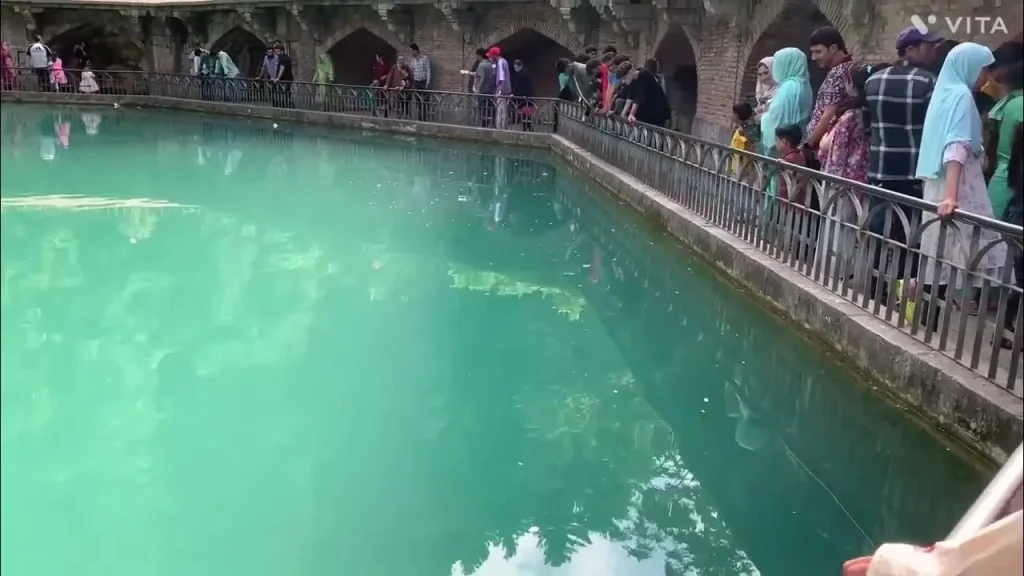
    Verinag on the road to Pahalgam is another spring of great importance and beauty with deep blue water, which also issues from the bottom of a high scarp of a mountain spur, and here again Jehangir built a pleasure garden and a summer house. An octagonal pavement has been raised around the spring by the Emperor Jehangir. The Emperor was infatuated with the beauty of Verinag to the extent that while breathing his last at Chakas village near Rajouri, he wished to be buried at Verinag.

    Khanqah-e-Moula: Sufi Influence Reflected in Kashmir Monuments

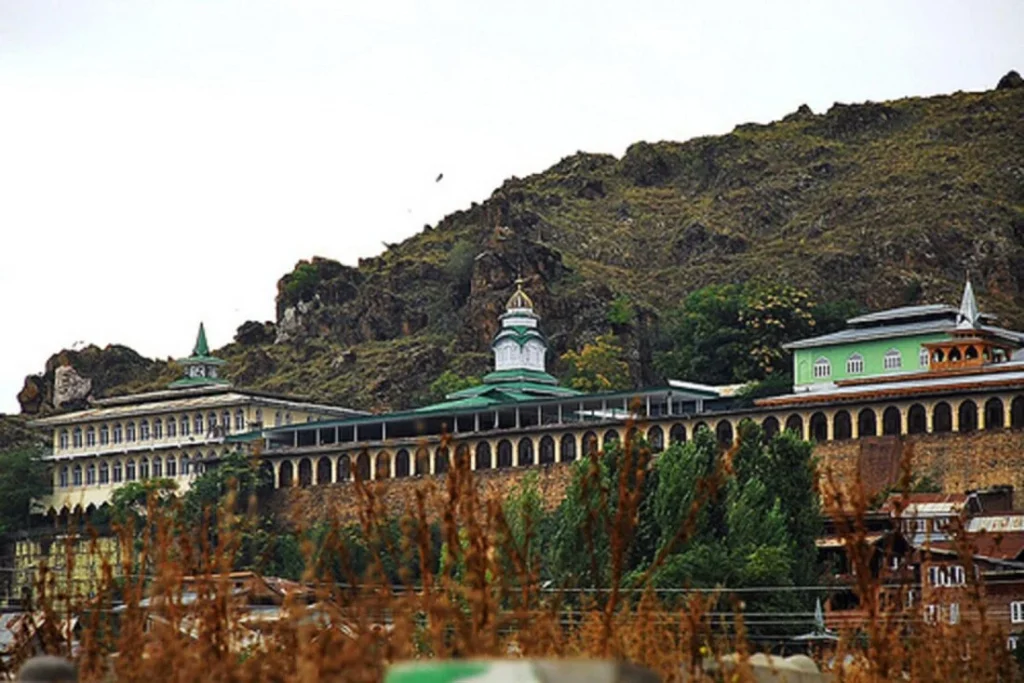
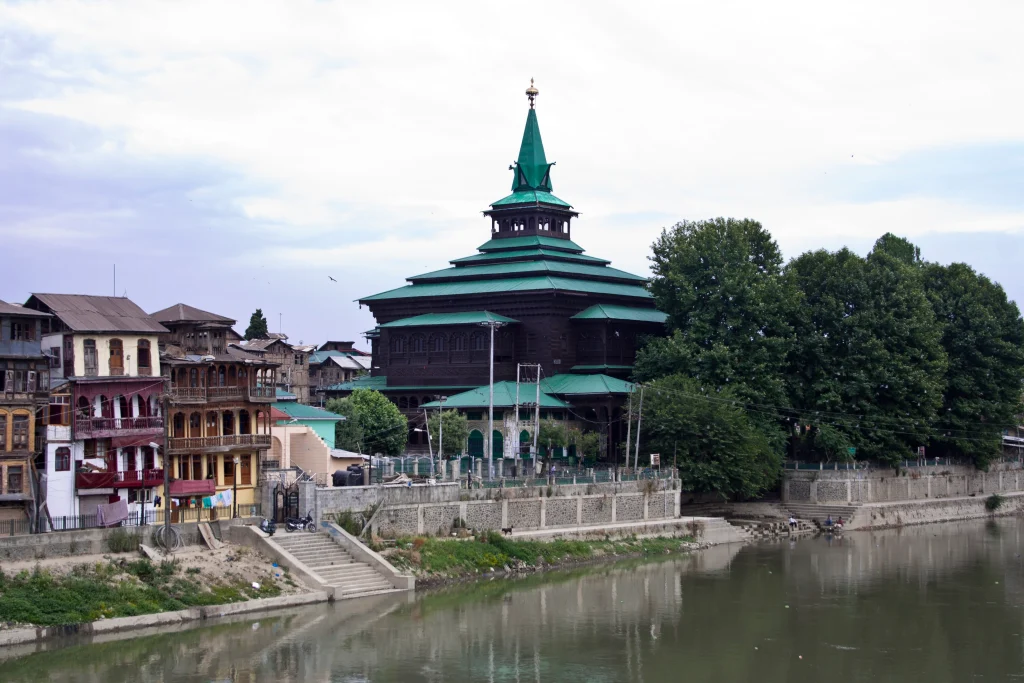
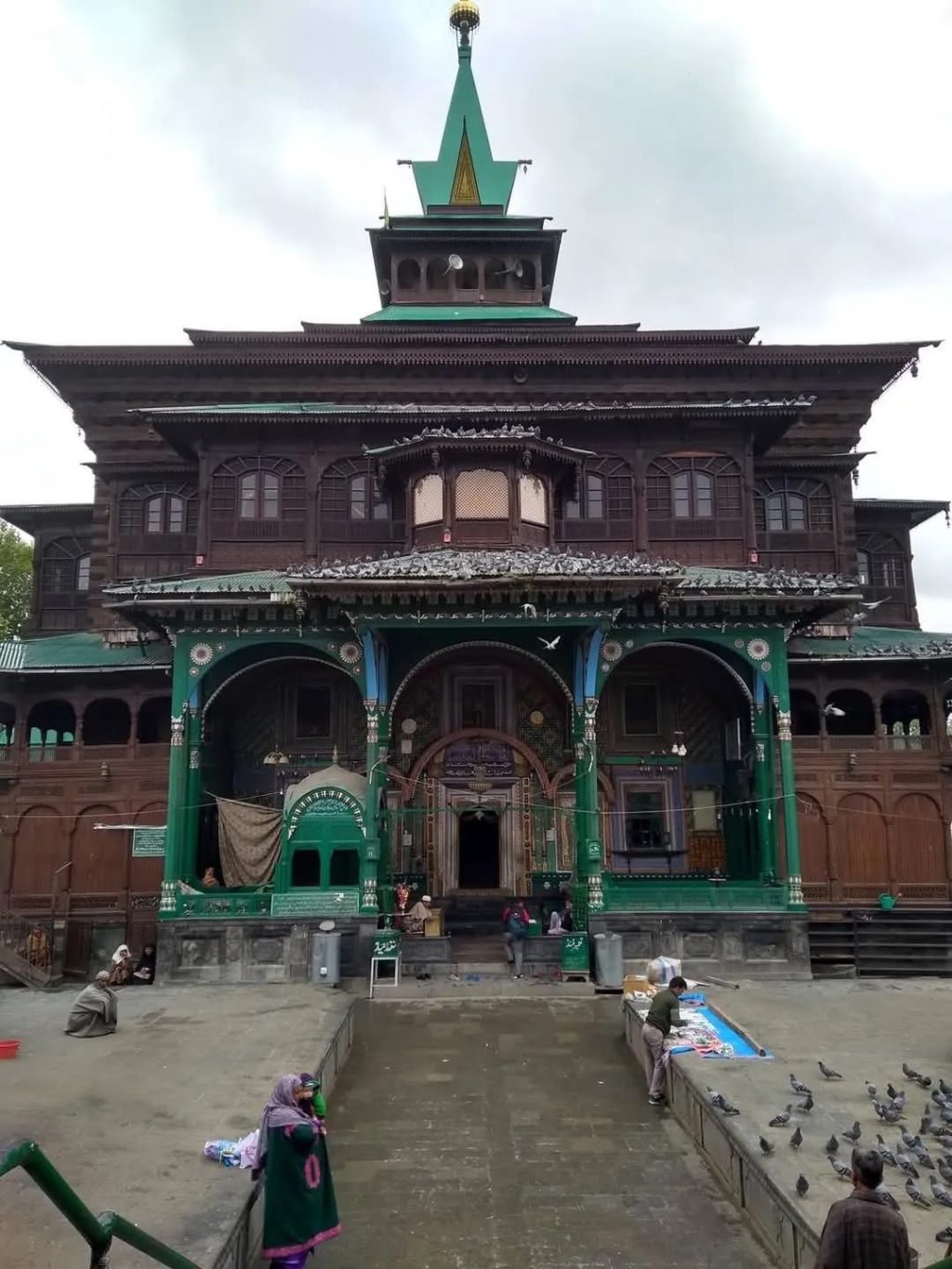
    Khanqah-e-Moula, also known as Shah-e-Hamadan Masjid and Khanqah (the First mosque/masjid in Jammu and Kashmir) located in the Old City of Srinagar, Jammu and Kashmir, India. Situated on the right bank of the river Jhelum between the Fateh Kadal and Zaina Kadal bridges, it was first built in 1395 CE, commissioned by Sultan Sikendar. It is one of the best examples of Kashmiri wooden architecture, and is decorated with papier mache.

    The current mosque structure was constructed after destroying an ancient temple dedicated to the Hindu goddess Kali and a sacred Hindu site. It is believed by some that Sayyid Ali Hamdani had the temple of Kali demolished and built the present mosque with its material, and that a spring dedicated to Kali is still inside the mosque. The railing at the back of the mosque complex leads to a bright orange marking on the stone just below that suggests the foundation belonging to the destroyed Kali Shri temple. 

    Local Hindus were involved in various communal disputes and repeated altercations by 1942, agitating for the right to build a covered shrine adjacent to the Muslim shrine, which eventually led to a boycott of Muslim-owned shops by Kashmiri HindusIn ‘Eminent Personalities of Kashmir’, a book edited by a Kashmiri Hindu, Krishan Lal Kalla, mentions that according to Hindu belief, Khanqah was first the Kali temple.

    The book claims: “When Hazrat Ameer Kabir returned from Makkah, he went into the temple and offered his prayers. After he left the place, it was found that he had left footprints on that stone plate where he had bowed before the God. That temple was converted at once into Khanqah-e-Moula.

    Pathar Masjid: Mughal Stone Craftsmanship in Kashmir Monuments

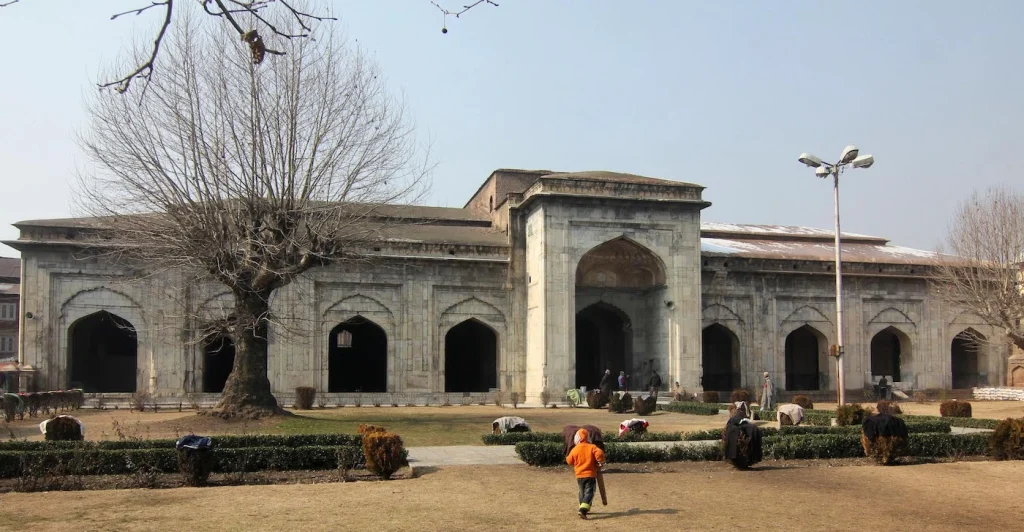
    In the Nowhatta region of old Srinagar stands a somewhat dilapidated grey structure, seemingly out of place in a setting so close to the bustling capital of what is, by most accounts, a modern Union Territory in a modern nation. The fact that this structure is a mosque is not immediately apparent due to its stark architectural and material differences when compared to most of the mosques of the region.

    It almost seems as if the shops, checkpoints, and barbed wires that have cropped up surrounding the mosque were deliberate attempts by the marching arrow of time to hide this medieval oddity from a world that reinforces modernity and embraces homogeneity. If one decides to explore this mosque more closely, however, the decorated arches, the lotus leaf carvings, and the domed roof reveal a centuries-long gripping tale of imperial ambition and accomplishment in the 17th century, along with neglect and conservation in the 20th and 21st centuries. The story of the Pathar Masjid (literally meaning the ‘Stone Mosque’)is one that deserves attention.

    Pathar Masjid consists of a long arcade, located to the west of an enclosed courtyard. The façade of the mosque consists of nine arches, each of which is further enclosed in shallow cusped arches. These shallow arches, in their turn, are enclosed in rectangular frames. In addition, all these arches have been built horizontally, and this too is another distinction of this building.

    Among these arches, the one in the center has a large portico. The plinth of the mosque is also very striking; one should stop to admire the lotus leaf coping on it.  The spaces between the projecting cornice and the eaves are also decorated with a series of lotus leaves. These leaves are mostly carved in relief, but some of them have been pierced for ventilation purposes. The half-attached “bedpost” columns at the jambs of the entrance are also very remarkable.

    Architectural Styles in Kashmiri Monuments: A Cultural Fusion

    Mughal architecture is one of the most significant and enduring legacies of the Mughal Empire in India. Characterized by grandeur, intricate ornamentation, and structural innovations, it evolved through a blend of Persian, Timurid, Indian, and Central Asian influences. Among these, Persian architectural traditions played a particularly dominant role in shaping Mughal architecture, affecting its aesthetics, construction techniques, and urban planning.

    The Persian influence on Mughal architecture can be traced back to the early Mughals, who were deeply connected to Persian culture through their ancestry, administration, and artistic inclinations. This influence was evident in the construction of mosques, palaces, gardens, and mausoleums, integrating Persian elements such as double domes, iwans (vaulted halls), charbagh (four-part gardens), calligraphy, intricate tilework, and symmetrical designs.

    Conclusion

    The need of the hour is a comprehensive plan that ensures regular maintenance, strict regulation against illegal encroachments, and promotion of these heritage sites on a global platform. By preserving these monuments, we not only protect our past but also create a source of pride and inspiration for future generations. The heritage of Jammu & Kashmir is a treasure that belongs to all of humanity, and we must act now before it is too late. Let us come together to safeguard the heritage monuments of this region and ensure that the stories, traditions, and architectural marvels they hold are preserved for the world to see and cherish.

  • A Journey About Kashmiri Culture: Fairs and Festivals

    A Journey About Kashmiri Culture: Fairs and Festivals

    The Kashmir region is predominantly mountainous, with deep, narrow valleys and high, barren plateaus. The relatively low-lying Jammu and Poonch plains in the southwest are separated by the thickly forested Himalayan foothills and the Pir Panjal Range of the Lesser Himalayas from the larger, more fertile, and more heavily populated Vale of Kashmir to the north.

    The vale, situated at an elevation of about 5,300 feet (1,600 meters), constitutes the basin of the upper Jhelum River and contains the city of Srinagar. Jammu and the vale lie in Indian-administered Jammu and Kashmir, while the Poonch lowlands are largely in Pakistan-administered Kashmir. There is no iota of doubt that Kashmir has a heritage of rich culture.

    If religion plays a pivotal role in contributing to the cultural richness of the Kashmir valley, the linguistic culture adds finesse to it. According to Sir George Grierson, a renowned linguistic scholar, the Kashmiri language was developed in Dardistan, the region between North West of Punjab and the Pamir. Barring Arabic, Persian, and Sanskrit words, the remaining words of the language are Dardic or Paschachi. Gierson adds that ‘’Kashmiri has immensely and for centuries been influenced by Sanskrit.”

    History Of Kashmir And Its Cultural Roots:

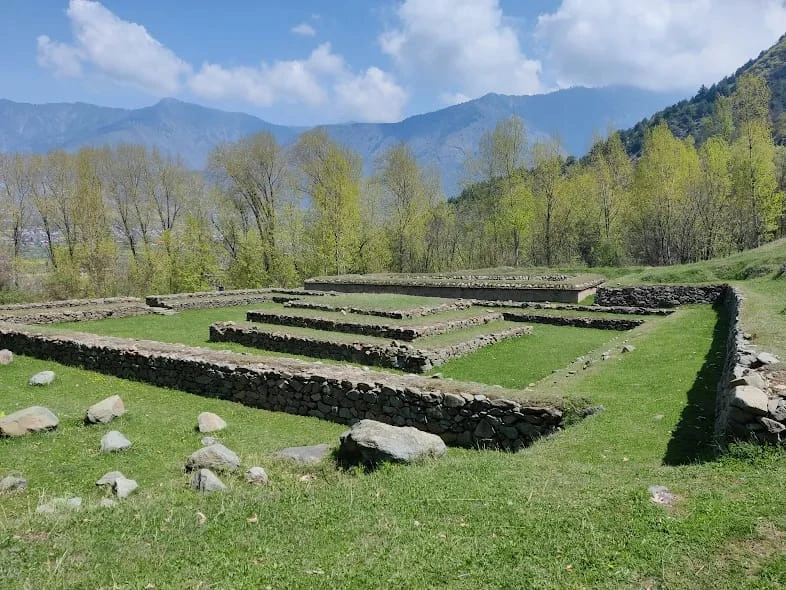
    The archaeological evidence available from Kashmir is a rich source for reconstructing the history of ancient and early medieval Kashmir. The earliest monumental Remains of the historical period have been reported from Harwan and are dated from the 3rd to the 6th centuries AD. Harwan is a prominent site where buildings and terracotta tiles have been excavated. These tiles reveal certain. The archaeological remains of temples constructed during the reign period of Lalitaditya have been reported. Of these, the majestic ruins of the Sun Temple at Martanda represent the glory and splendour of this period.

    Several sculptural remains have also been reported. The remains at Avantipura are a fine example of the architectural achievements of the reign of Avantivarman. Talking of Kashmir, everyone heaps praise on its postcard-worthy scenery, its houseboats and apple trees, but not much is known about its syncretic traditions of sacred architecture.

    The region has long been a melting pot of cultural practices that include Hinduism, Buddhism, and Islam. The 14th century, in particular, is considered a watershed in Kashmir’s history, when different traditions of art and architecture came together — this can be seen, for example, in the ubiquitous pagoda-style construction of mosques such as Khanqah-i-Maulla (Great Khanqah) or Madin Sahab.

    Traditional Kashmiri Attire jewelry:

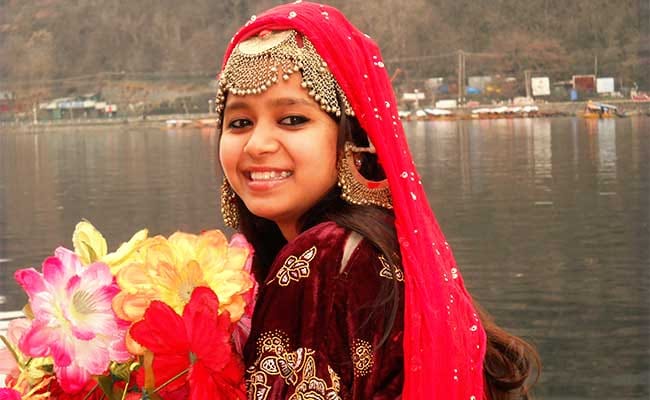
    The Jammu and Kashmir traditional dress is renowned for its intricate embroidery and detailed patterns, showcasing the rich culture and landscapes of the region. This traditional clothing is carefully crafted to combat the cold climate.

    The most commonly worn outfit for both men and women is the “Pheran,” a long, loose gown that extends below the knees. Pherans are crafted from various materials, including wool, silk, and cotton, chosen based on status and weather conditions. Women in Kashmir also don the “Pheran,” a prominent garment paired with a variety of skull caps and headgear in diverse styles.

    Their headpieces consist of a vibrant, stitched scarf called “Taranga,” fastened to a suspended cap, narrowing down towards the heels. Tradition and culture are the essence of Jammu and Kashmir- from its poetry to its cuisine to its distinctive fashion.

    The state’s rich heritage is reflected in the enchanting Kashmiri gold jewellery that is known for its intricate, well-crafted designs and unique and minute detailing. And their names are derived from the Persian and Sanskrit languages.

    The Mughal Queen Noor Jehan is credited with introducing and influencing the intricate variety of jewellery in Kashmir. The native artisans of Kashmir are exceptionally talented in the art of jewellery-making. Their techniques are old and traditional, and considered impossible to recreate.

    Jiggni-Kashmiri Jewellery

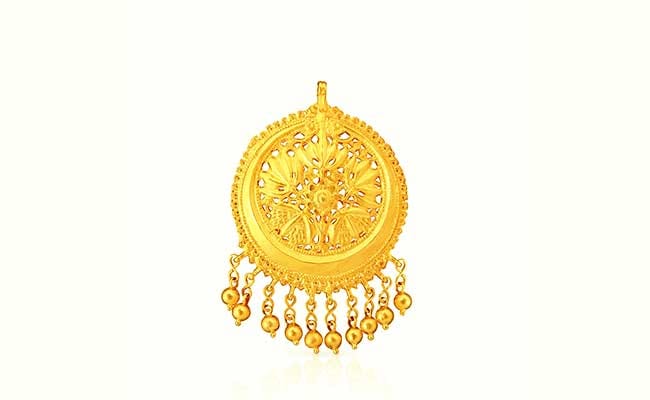
    This ornament is worn on the forehead. It is made of gold and is fringed with hanging pearls and gold leaves. It is usually triangular, semi-circular, or circular.

    Halqaband-Kashmiri Gold Jewellery

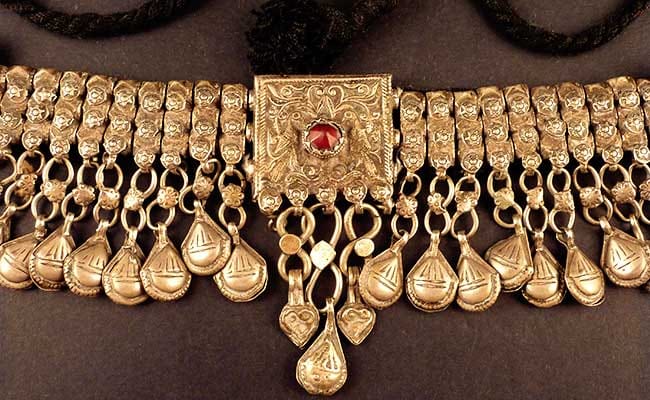
    A traditional tight choker, the halqaband is worn around the neck. It is usually made of gold and has interlocking sections joined together with thread.

    Dejihor-Gold Kashmiri Earrings

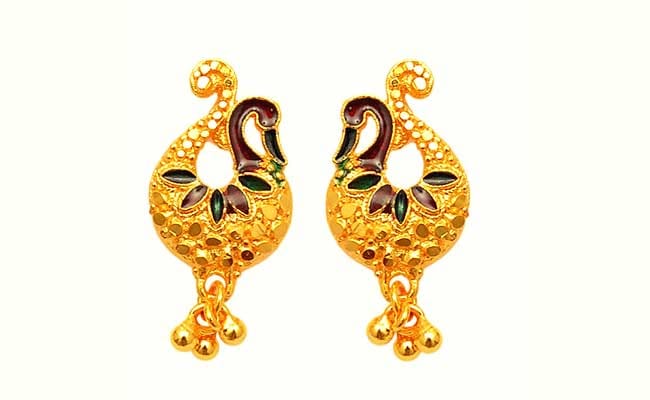
    Every Pandit woman wears the dehiya as a symbol of her marriage. It is a dangler earring that hangs from the upper portion of the ear. The great Kashmiri acharyas believed it was designed to infuse divine strength in married women.

    Atta-hor-Gold Kashmiri Jewellery

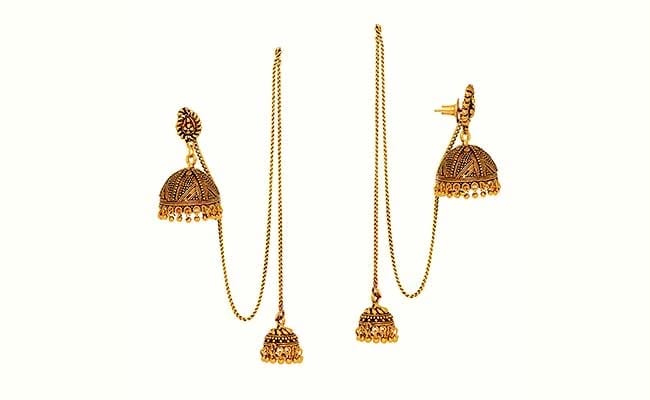
    Another ornament worn by married Kashmiri Pandit women, atta-hor hangs over both ears and is connected by a gold chain over the head.

    Kana-Door-Traditional Kashmiri Earrings

    More popular among younger women, kana-door is also a piece of jewellery for the ear. Made of gold and studded with red or green pearls, kana-door also refers to ‘beloved’ in Kashmiri poetry.

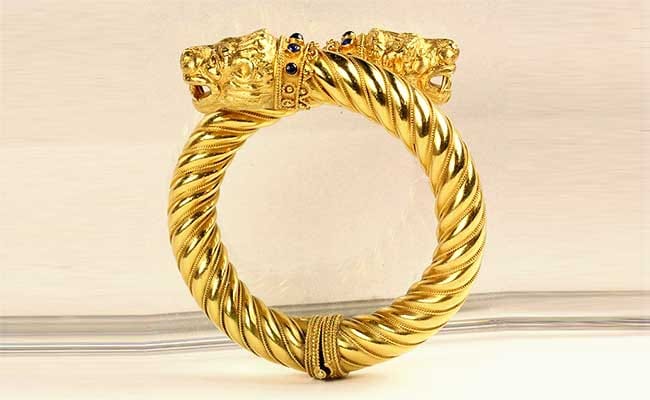
    Gunus- Gold Kashmiri Bangles

    An ornament for the wrist, gunus is a thick gold bangle and has the head of a snake or a lion at both ends. This design is one of many gold designs inspired by wildlife.

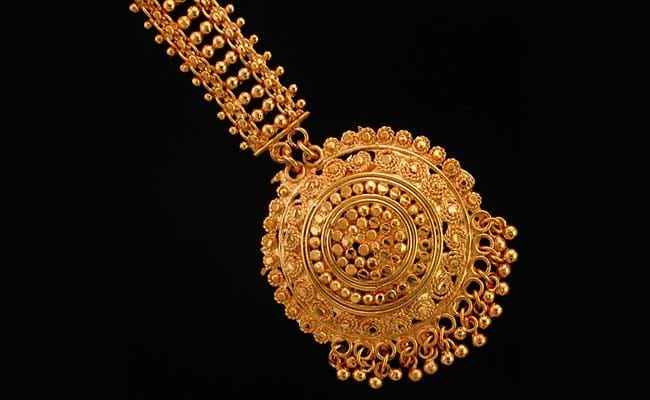
    Kashmiri Gold Maang Tika

    When it comes to bridal jewellery, a gold maang-tika (or just tika) is another ornament that’s worn on the forehead. Brides also wear a kada or bangle, made of fine gold filigree work, on their wrists.

    Exploring The Rich Flavors Of Kashmiri Cuisine

    Kashmiri cuisine is predominantly non-vegetarian, but it also has some exquisite vegetarian dishes. Rice is a staple in Kashmiri cuisine. Kashmir is one of the largest producers of saffron in the world, therefore, saffron is commonly added to many dishes. Kashmiri cuisine is known for its use of spices such as fennel seeds, cinnamon, cardamom, cloves, and Kashmiri red chili powder, which adds a vibrant red color without the intense heat found in other Indian cuisines.

    Kashmir’s fragrant Elixir

    In Kashmir, kahwa is not just a drink; it represents friendliness and warmth. This traditional Kashmiri green tea is made with saffron, almonds, and various spices that enhance its taste. It is a staple in Kashmiri households. The famous food of Kashmir pairs well with a hot cup of kahwa. It’s also a great way to start or finish a meal.

    Harissa Kashmiri Comfort Food

    This is Kashmir’s famous dish, which is loved by the Kashmiri people, especially during winters. Slowly cooking mutton and a mix of spices results in a rich and creamy texture for this filling meat porridge. Harissa is a wonderful example of Kashmiri cuisine because it makes every bite feel cozy and warm. Ingredients and Methods: To make harissa, cook cardamom, fennel, cloves, and rice slowly with a lot of ghee (clarified butter). This is a very time-consuming process. Until the mixture has a thick and smooth consistency, we stir it repeatedly.

    Kashmiri Wazwan

    Famous Food of Kashmir. It wouldn’t be a discussion on Kashmiri cuisine without including Wazwan. Customarily served at weddings and other special occasions, this sumptuous feast comprises multiple courses expertly prepared by skilled chefs known as Wazas. With a diverse array of flavors and textures, the Wazwan is a true celebration of Kashmir’s famous food.Main Dishes at Wazwan are Rogan Josh, Tabak maaz, Gushtaba & Rista, Yakhni and Dum Aloo.

    Festivals And Celebrations In Kashmiri Culture

    Kashmir, with its rich cultural tapestry, celebrates a myriad of festivals that blend religious traditions with communal harmony. One of the grandest celebrations is Eid al-Fitr, marking the end of Ramadan. The vibrant atmosphere is filled with prayers, feasts, and the exchange of warm greetings, bringing together people from diverse backgrounds in a spirit of unity and joy.

    Eid-ul-Adha is to commemorate Prophet Ibrahim’s devotion to Allah SWT and his readiness to sacrifice his son, Ismail. At the very point of sacrifice, Allah SWT replaced Ismail with a ram, which was to be slaughtered in place of his son. This command from Allah SWT was a test of Prophet Ibrahim’s willingness and commitment to obey his Lord’s command, without question. Therefore, Eid-ul-Adha means the festival of sacrifice.

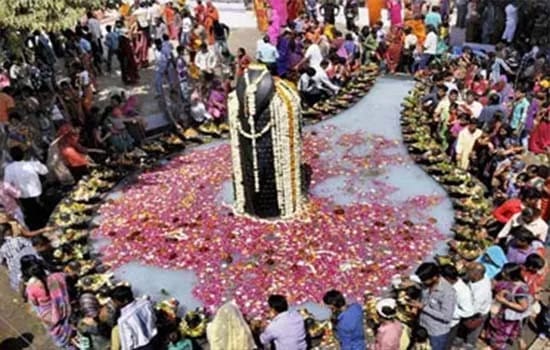
    Kashmiri Pandits celebrated the annual festival of ‘Herath’ or Maha Shivaratri in the Valley on Friday. Scores of Muslims from the Valley also joined in to wish the Pandits on the occasion. Pandits were seen busy with the festivities on Friday. Special pujas were held at Shankaracharya temple in Srinagar and the Kheer Bhawani temple in Ganderbal.“As per our tradition, we celebrate Herath, which means ‘Har Rati’, in our respective homes. Puja starts after sunset till midnight.

    Shivratri is the most important of our festivals, lasting for a full week in the month of Phalguna. It is also known as Herath among Kashmiri Pandits, a phonetic derivative of Har-ratri, the night of Hara (Shiva). It is a socio-religious function that is ingrained in the daily lives of Kashmiri people. Every Kashmiri female is considered a Parvati who is married to Shiva.

    Navreh is an important Kashmiri festival, celebrated by Kashmiri Pandits as the New Year with all delight and freshness. It is dedicated to their Goddess Sharika and pays honor to her during the Navreh festival, and is celebrated with great enthusiasm and sanctity. Navreh falls on the first day of the month of Chaitra, which falls around March or April. The name “Navreh” came from the Sanskrit word “Nava Varsha,” which means new year. Many Kashmiri Pandits who migrated to the plains before the 19th century also celebrate this festival.

    Kashmiri Language And Famous Literary Figures

    Kashmiri is the language of the valley of Kashmir. In a dialectic form, it has spread southwest into the valley of Kishtwar, and to the South, it has flowed over the Pir Pantsal range into the lower hills lying north of the river Chenab, where it appears in several mixed dialects. People of Kashmir call this language Koshur.In current literature, the following are generally treated as the area-defined dialects of Kashmiri:

    1. Kashtawari

    This is spoken in the Valley of Kashtawar, which lies in the southeast of Kashmir, on the upper Chenab River. It shows the deep influence of the Pahari and the Lahanda dialects, and is written in the Takri characters.

    2. Poguli

    This is spoken in the valleys of Pogul, Paristan, and Sar. These valleys lie to the west of Kashtawar and to the south of the Pir Pantsal (Panchal) range. Bailey has used the cover-t.mp3 Poguli for the language of this area. It is mixed with the Pahari and Lahanda dialects.

    3. Siraji

    This is spoken in the town of Doda on the River Chindwin. Whether or not it is a dialect of Kashmiri is still debated. Grierson thinks that it can, with almost equal correctness, be classed as a dialect of Kashmiri because it possesses certain Dardic characteristics which are absent in Western Pahari.

    4. Rambani

    This is spoken in a small area that lies between Srinagar and Jammu. It is a mixture of Siraji and Dogri, and shares features with both Kashmiri and Dogri.

    Kashmir, which is known as the ‘paradise on earth’, has been the abode of eminent scholars, savants, historians, and poets. Some saints and poets preferred to use their own Kashmiri dialect to convey their messages and thoughts. These included both men and women. Most prominent among them were Sheikh Noor-u-Din Noorani, Lal Ded, Rupa Bhawani, Habba Khatoon, and Arinimaal.

    • Lal Ded

    In Kashmir, some people consider her a poet, some consider her a holy woman, and some consider her a sufi, a yogi, or a devotee of Shiva. Some even consider her an avatar. But every Kashmiri considers her a wise woman. Every Kashmiri has some sayings of Lalla on the tip of his tongue. The Kashmiri language is full of her sayings.

    • Habba Khatoon: 

    Habba, at the very outset of her poetic career, rebelled against the prevalent standards of poetry-writing. Textbook idealism is not found in the dictionary of her pulsating emotions. She also did not try to bridge the distance between the ideal and the real. Her substantial contribution in this domain is to interpret her life as it was and not what it should be.

    Handicraft And Art: The Creative Soul Of Kashmir

    About Kashmir Shawls, it is said, “Of all Indian textiles, none excels in beauty, colour, texture and design as the famous Kashmir Shawl”.Shawls are produced by two techniques, loom woven or kani shawls, and the needle embroidered or sozni shawls.

    Pashmina is known world over as cashmere wool, it comes from a special goat (Capra hircus) living at an altitude of 12000 to 14000 ft, reared by shepherd nomads around famous Pongkong Lake in the close vicinity of western Tibet. Raffal is spun out of Marino wool tops and is a popular type of shawl.

    Papier Mache is one of the most popular crafts practised in Kashmir. The tradition of the Kashmir Papier Mache has its origin rooted in the 15th century when King Zain-ul-Abidin invited accomplished artists and craftsmen from Central Asia.

    A French term so commonly adopted in East and West and meaning “mashed paper”, papier machine is a unique combination of line and colour on moulded forms of a variety of objects. It involves ornamentation in colour over smoothened surfaces built up of paper pulp or layers of paper.

    The origin of hand-knotted carpets, locally known as “Kal baffi,” dates back to the 15th century, after which it progressively attained a high degree of perfection. It is said that Sultan Zain-ul-Abidin brought carpet weavers from Persia and Central Asia into Kashmir to train the local inhabitants.

    The Music And Folk Traditions Of Kashmir

    Jammu and Kashmir have deep musical roots. Kashmiri music embodies the state’s melodic heritage and refined inheritance. In addition, the state has a long history of traditional musical instruments that have become the soul of Kashmiri music.

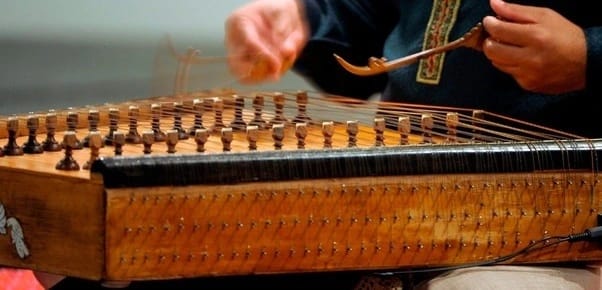
    The Indian Santoor is a trapezoid-shaped hammered dulcimer. It is a variant of the Iranian Santur. The instrument is made primarily of walnut and has 25 bridges. Each bridge has four strings, for a total of 100.

    Next in our Kashmiri musical instruments list is the Sitar. Sitar is a plucked lute with a long neck, similar to the Persian Sitar. According to Curt Sach, the Arabs refer to it as the largest variety. Tanbur Kabir Turki, also known as a large Turkish lute.

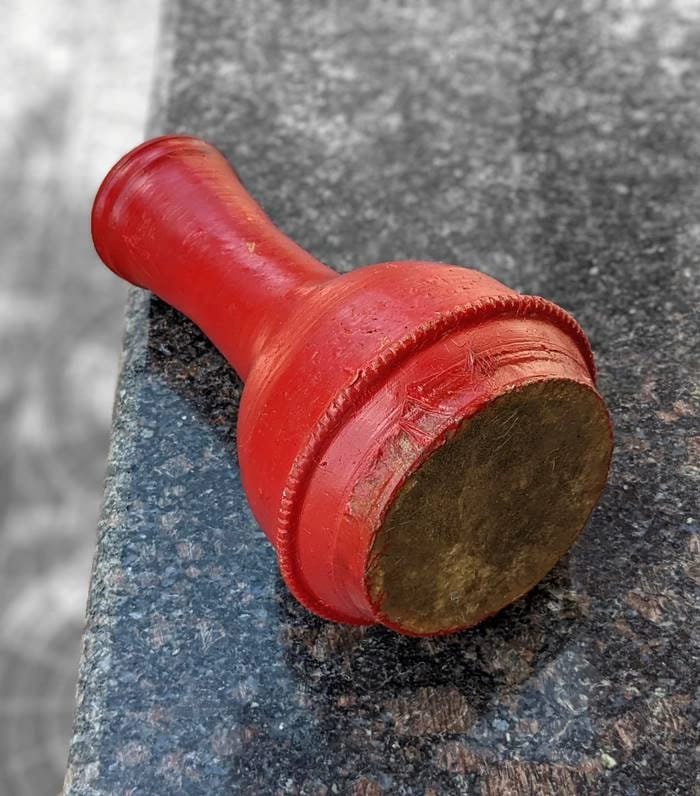
    Tumbaknari is an earthen-shaped instrument used for singing at all Kashmiri functions, particularly weddings. The instrument is thought to have originated in Iran. Tumbaknari is typically played by women at weddings in the valley, and weddings are incomplete without it.

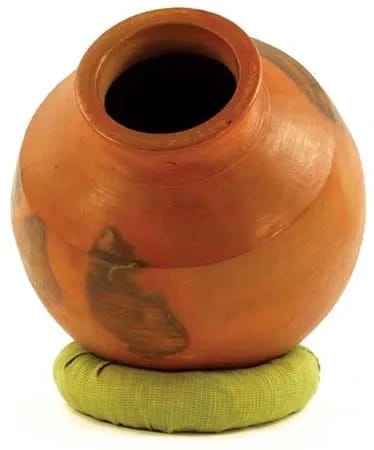
    The Noet is the most ancient type of drum variety known to mankind. The shape of the Noet of Kashmir is similar to the Ghatam of South India or the Matki of Rajasthan. They are used as instruments in music in those states. Thus indicating that they may have started their journey from the same cultural background.

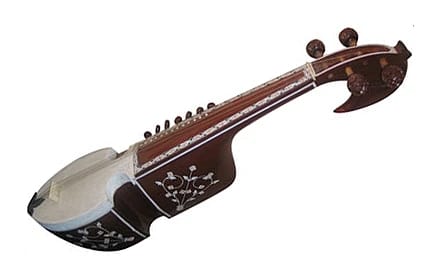
    Rabab is an essential component of Kashmiri music culture. It’s made of second-growth mulberry wood. It measures about three and a half feet long. Rabab is usually performed in the form of songs at special occasions and weddings.

    Historic Places and Architecture In Kashmir

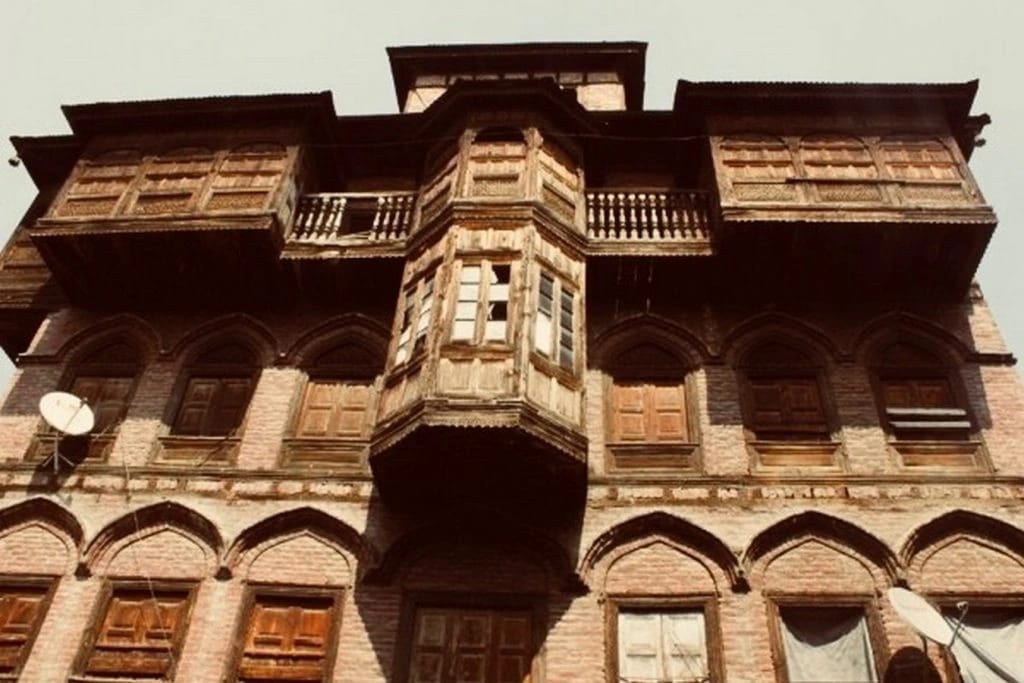
    The traditional buildings are of two types based on plan- square plan and linear plan, having windows on all sides, and the arrangement of function inside the house is distributed in symmetry, as symmetry is the basic principle for earthquake-resistant structures. Each house has a Zoon Dub or a cantilevered balcony designed for the viewing of the moon (zoon).

    The balconies and the eaves have beautiful PinjaraKari work and wooden wind chimes shaped like jhumkas. The interior roofs have wooden false ceilings of khatamband panels of interlocking geometric shapes derived from the Persian arts and are made up of walnuts or deodar with visible joinery. 

    Based on the construction techniques, traditional houses in Kashmir are divided into two categories—Taq construction and Dhajji Dewari. Dhajji De

    wari consists of wooden frames and trusses filled with flat stones or bricks, and is packed neatly into the gaps with mud or lime mortar, and the remaining gaps are filled with stone flakes. To increase the strength and to secure the stones against falling out, wire mesh is nailed to both sides of the wall, and the wall is then plastered using mud or cement.

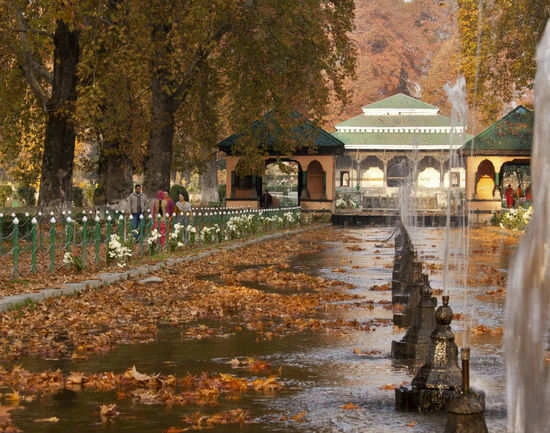
    Mughal gardens in Kashmir will be incomplete without the mention of Shalimar Bagh. Shalimar, literally translating to ‘the abode or hall of love,’ is an alluring garden built by the Mughal emperor Jahangir for his wife, Noor Jahan. The garden has three terraces, with pools, fountains, and trees on the edges of each terrace. The lush garden is the epitome of natural beauty and tranquillity.

    Translating to ‘garden of delight’ or ‘garden of joy’, Nishat Bagh is exceptionally beautiful and incredibly artistic. This second-largest Mughal garden in Srinagar is located on the eastern side of Dal Lake. It is divided into 12 terraces (representing the 12 zodiac signs), adorned with flowerbeds and fountains. With the Persian design concept, exceptional Mughal architectural style, and mesmerising landscape, Nishat Bagh will treat your senses.

    Social Customs And Values In Kashmiri Society

    Examples of Kashmiriyat cannot be found anywhere else in India because the essence of humanity present in Kashmir is unique.

    In my opinion, Kashmiriyat can be understood through the human nature of the people in Kashmir. The best examples can be found in how any outsider, whether known or unknown, is treated as a guest of honour. People in Kashmir respect their guests like God. Kashmiri people are known for their hospitality without any discrimination based on caste, colour, or religion.

    This unique quality is often highlighted by those who have visited Kashmir. The first thing tourists and visitors say about Kashmir is, “Kashmiri log mehman-nawaz hain” (Kashmiri people are hospitable). Kashmiris are gentle, sober, and noble, living harmoniously alongside people of other religions.

    Kashmiriyat has been characterized by a strong tradition of hospitality, where guests are treated with utmost respect and care. This hospitality is a manifestation of the underlying humanity that defines the region’s cultural ethos. Even during times of conflict and violence, many Kashmiris have continued to uphold these values, offering protection and assistance to those in danger, regardless of their background.

    This unwavering commitment to humanity is a testament to the enduring spirit of Kashmiriyat, which seeks to transcend divisions and foster a culture of compassion and unity. Kashmiriyat is a secular social fabric of the people living in Kashmir, where individuals, regardless of caste, colour, or creed, demonstrate deep mutual care and support.

    Conclusion

    Kashmir’s cultural heritage is a tapestry woven from its history, crafts, festivals, and cuisine, each thread revealing a facet of the region’s rich identity. As you journey through Kashmir, you’ll encounter its impassioned traditions and timeless artistry at every turn, offering a profound and immersive experience. This remarkable blend of elements makes Kashmir not just a destination but a captivating exploration of a culture that continues to enchant and inspire.

  • Timeless Historic Places in Kashmir You Need to Explore

    Timeless Historic Places in Kashmir You Need to Explore

    In today’s world, there is a rapid change in many fields, and correspondingly, new fields of science have appeared. In parallel with it, some values that have existed for a long period have started to have more importance, and more studies have been conducted to investigate, save, and transfer them to the next generations…these are various kinds of Kashmir heritages.

    “Heritage is our legacy from the past, what we live with today, and what we pass on to future generations”.We belong to nations, religions, small groups, and professions. We are shaped by our economic conditions, our ethnic background, and our gender. Understanding the overlapping and sometimes contradictory histories of these different communities deepens our connections to them. We gain insight into, appreciation for, and sometimes a necessary skepticism regarding our own beliefs and practices. Kashmir’s heritages reflect the cultural, historical, and traditional values passed through generations, offering deep insights into diverse communities and their legacies.

    Top Historic Places to Explore in Kashmir:

    1. Pari Mahal.
    2. Hari Parbat.
    3. Bumzuva Cand Temple.
    4. Mughal Garden.
    5. Martand Sun Temple.
    6. Shankaragaurishvara.
    7. Sugandhese temple.
    8. Amarnath Temple..
    9. Ancient Buddhist monastery.

    Pari Mahal

    Pari Mahal, literally meaning The Fairies’ Abode, is a beautiful seven-terraced garden that overlooks the striking city of Srinagar from the top of the Zabarwan mountain range. The garden is located towards the southwest of the famous Dal Lake. PariMahal belongs to the Mughal period, hence, its architecture portrays the beautiful Islamic architecture that was one of the patronages during the rule of the Mughal emperor Shah Jahan.

    Hari Parbat

    The Hari Parbat fort was built on a hill over several centuries. Emperor Akbar built a wall around the hill in the 16th Century, and the Afghan governor Atta Mohammed Khan built the fort in the 18th Century.

    There is a temple within the fort walls, and there is also a mosque below the fort. There are about 150 steps to reach the top. The fort itself is interesting, but more impressive forts have been seen. The view, however, is spectacular. On one side, there is an amazing view of the lake.

    Bumzuva Cand Temple

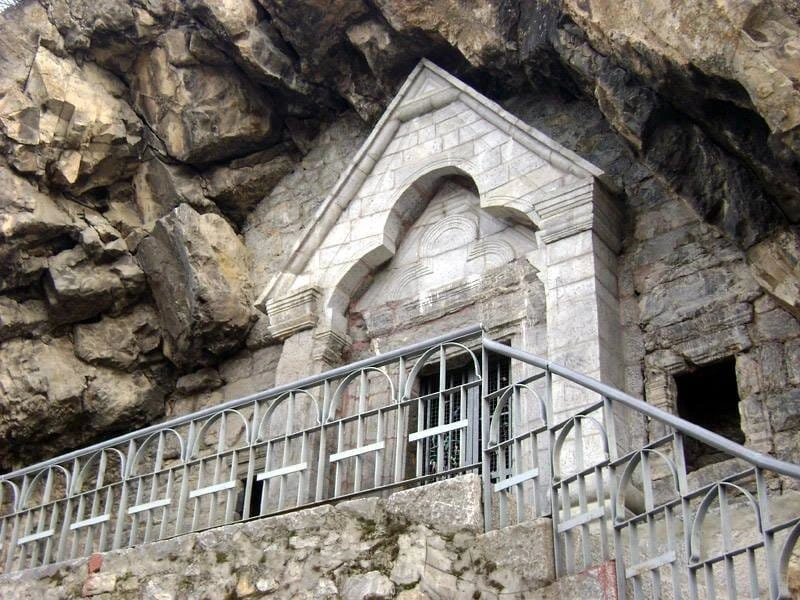
    Bhumju or Bumzu cave is an impressive archaeological site. It has been carved into the massive limestone rock. This cave must have emerged as a place of salvation. The date of the cave is yet unknown, while legends have various stories to tell us. Some archaeologists had the assessment of it as an extremely old construction, and while others attribute it to the dynasty of Loha- ras, during the reign of Bhimshahi or Queen Didda.

    Mughal Garden

    Our list of Mughal gardens in Kashmir will be incomplete without the mention of Shalimar Bagh. Shalimar, literally translating to ‘the abode or hall of love,’ is an alluring garden built by the Mughal emperor Jahangir for his wife, Noor Jahan. The garden has three terraces, with pools, fountains, and trees on the edges of each terrace. The lush garden is the epitome of natural beauty and tranquillity.

    Translating to ‘garden of delight’ or ‘garden of joy’, Nishat Bagh is exceptionally beautiful and incredibly artistic. This second-largest Mughal garden in Srinagar, is located on the eastern side of Dal Lake. It is divided into 12 terraces (representing the 12 zodiac signs), adorned with flowerbeds and fountains. With the Persian design concept, exceptional Mughal architectural style, and mesmerising landscape, Nishat Bagh will treat your senses.

    Martand Sun Temple

    Martanda Sun Temple, located in the Anantnag district of Jammu and Kashmir, is one of the few sun temples in India. Though the temple is in ruins, it retains its grandeur and majesty. There are numerous versions of the temple’s history, ranging from mythological legends to literary traditions of recorded history.

    The temple itself is not more than 40 feet high, but its solid walls and bold outlines, towering over the fluted pillars of the surrounding colonnade, give it an imposing appearance. There are no petty, confused details, but all are distinct and massive and most admirably suited to the general character of the building.

    Shankaragaurishvara

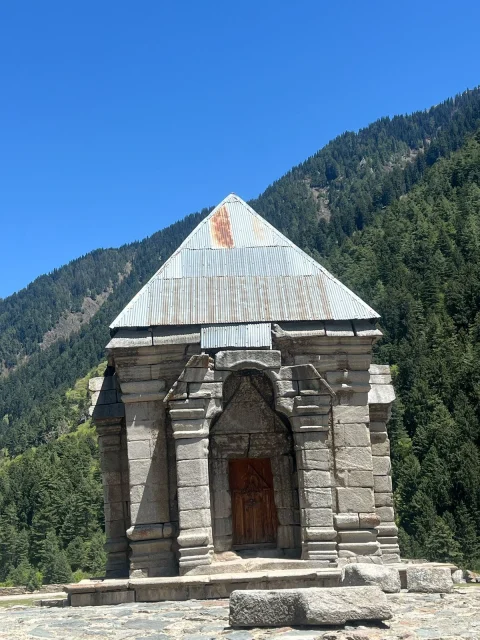
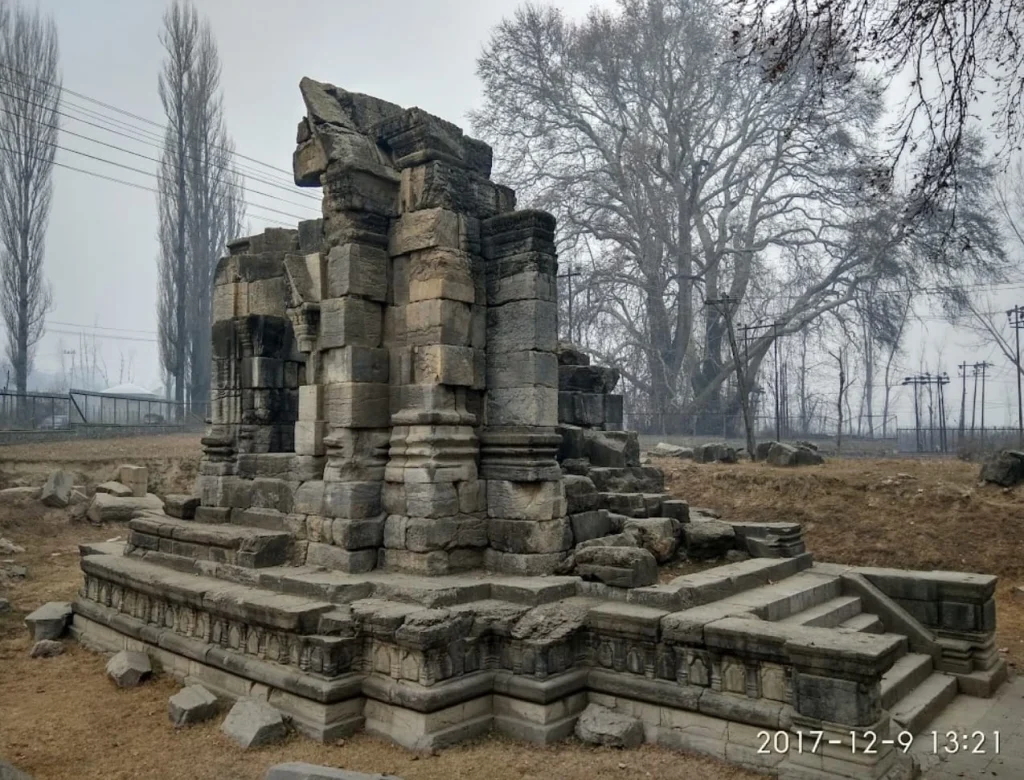
    The Shankaragaurishvara Temple is nestled in Pattan village, which is located at a distance of 27 km from Srinagar in the Baramulla district of Jammu and Kashmir. The presiding deity of the temple is Lord Shiva. The temple’s entrance porch faces towards the east. The exterior and interior surfaces exhibit intricately sculpted carvings. The pediments are placed symmetrically on each other. The columns at the entrance are heavily sculpted in a beautiful Kashmiri architectural style, especially in the detailing. The pedestal of the temple and the shrine are built in a peristyle, an open colonnaded pattern, within a walled enclosure. It is in the form of a cellular passage, and remnants of which are still visible.

    Sugandesha Temple

    Sugandesha Temple is a Hindu Temple dedicated to Lord Shiva, located in Pattan Town in Baramulla District in the Union Territory of Jammu and Kashmir. The entrance to the courtyard is in the middle of the eastern wall of the peristyle, and consists, as usual, of two chambers with a partition wall and a doorway in the middle. The temple stands on a double base, but it seems probable from the flank walls of the lower stair and the frieze of the lower base, in which the panels intended for sculpture decoration have been merely blocked out, but not carved, that the temple was never completed.

    Amarnath Temple

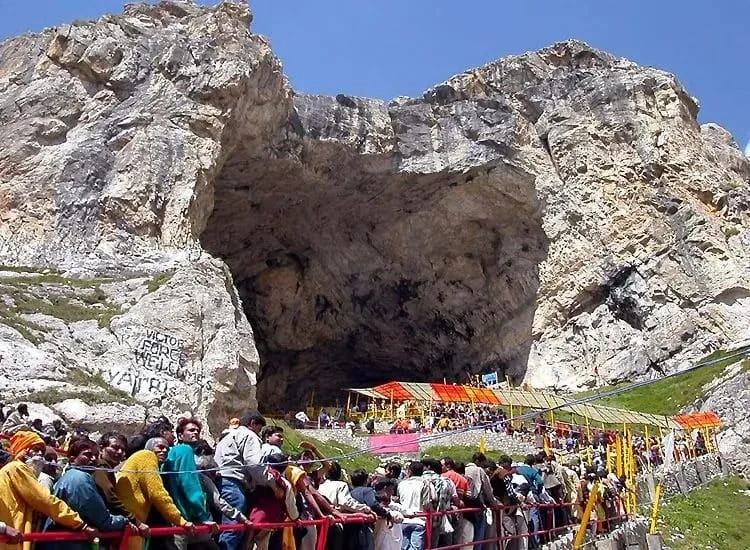
    Amarnath Cave is located approximately 3,888 meters above sea level, holds immense religious significance for Hindus, and is considered one of the most sacred pilgrimage sites. For those planning the Amarnath Yatra, which is tentatively scheduled to start on 1st July 2024 and end on 19th August 2024, it is important to understand how to reach Amarnath. Thousands of devotees from different parts of India undertake the Amarnath Yatra to seek the blessings of ‘Baba Barfani’ (also known as Amarnath).

    Ancient Buddhist Monastery

    Harwan monastery was also the home to Nagarjuna, one of the most important Buddhist philosophers of Mahayana Buddhism. Originally believed to be from Nagarjunakonda in Andhra Pradesh, he is said to have traveled to Kashmir and settled in a place called ‘Sadarhadvana’ or ‘The Grove of Six Saints’. The 12th-century Kashmiri scholar Pandit Kalhana, in his work Rajatarangin, writes, ‘A Bodhisattva lived then in this country as the sole lord of the land, namely the glorious Nagarjuna, who resided at Sadarhadvana.’ Historians like Aurel Stein have identified ‘Sadarhadvana’ with the Harwan monastery.

    Tips for Visiting Kashmir’s Historic Places:

    Treat the historic places with respect and follow any rules or guidelines provided. Visitors to the greater Bears Ears region, it is our responsibility to respect its natural and cultural sites both out of respect to the region’s Tribes and Pueblos, and for all visitors who come next. Over the past ten years, heightened attention and interest in the area has rapidly increased visitation, causing concern that the natural and cultural resources of Bears Ears are at great risk of being “loved to death.”

    You are a link in a chain of human existence that extends thousands of years into the past and future, and as a link in the chain, you have responsibilities. It is your job in the present moment to be a good steward of the land. “Visit with Respect” is how we describe our stewardship obligations: we aim to have a light touch on the landscape and be aware of those who came before us and those who will come after us.

    Hiring a tour guide for historic places offers numerous advantages, including insightful narratives, cultural significance, and efficient time management. Tour guides enhance the learning experience, overcome language barriers, and support local economies, making visits more meaningful and enjoyable.

    Why Should You Visit Kashmir’s Historic Places?

    Our heritage provides clues to our past and how our society has evolved. It helps us examine our history and traditions and enables us to develop an awareness of ourselves. It helps us understand and explain why we are the way we are.

    Heritage is a keystone of our culture that plays an important role in our politics, society, business, and worldview. It informs, influences, and inspires public debate and policy both directly and indirectly.

    “Every monument has a story to tell,” highlights the idea that monuments are more than just structures; they are tangible representations of historical events, cultural practices, and societal values.

    Conclusion

    These sites provide a window into the lives and achievements of previous generations, allowing us to learn from their successes and mistakes. Ultimately, exploring historical locations fosters a sense of wonder and appreciation for the enduring human spirit.”Every step into history is a step into a timeless story — where will your journey begin?”